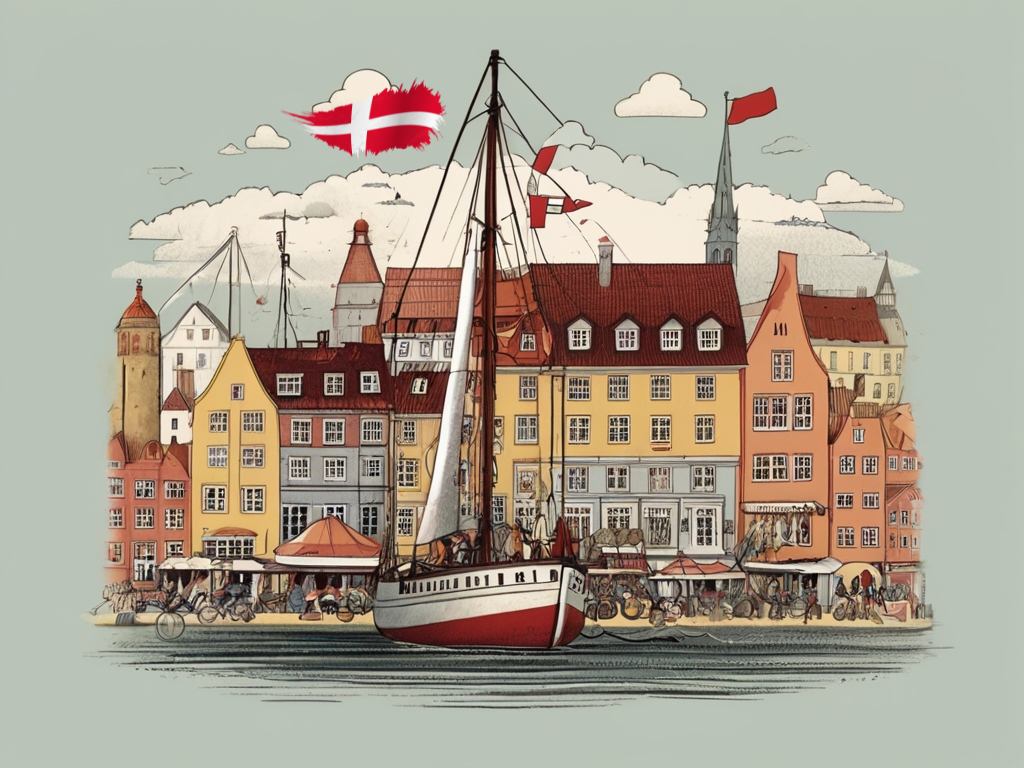
In late 2016, I moved to Denmark with a kinda "talent work permit", named the Greencard scheme (different from the US Greencard) to find a job as a software developer who has worked with IT infrastructure tools and technologies for over 10 years. Since then, I have lived in Aarhus, Høje Taastrup, Skovlunde, and different parts of Copenhagen, and have worked for various employers.
Here in this article, I am going to give you some hints about life in Denmark as an expat and also give you an idea about for whom Denmark is a good place to live and work and for whom it might be challenging.
Please bear in mind that this is just my personal experience and opinion, which might differ from yours.
Criteria
I will consider these factors to base my suggestions on:
- Gender
- Your place of birth
- Marital status & kids
- City
- Weather
- Social life
- Do you want to study, work as an employee, or become an employer?
- Workplace
- Digitization and bureaucracy
- Legislation
1. Gender
- If you are an LGBT+ person, Denmark is a safe place for you to live and work.
- If you are a woman, you will not face much inequality at work (even though some IT and engineering jobs are pretty man-dominated - you can read more about it here).
- There are a lot of Danish men who are tired of Danish girls and only date foreigners, so if you are a woman, you will have a high chance of finding a partner and even marrying a tall rich guy! 😀 (this is the opposite for men)
2. Your place of birth
As far as I have seen, Danes used to see Americans as "Gods"! So, if you were an American, you had a great chance of being welcomed. Even though Danes still love and admire Americans, this has changed a bit after the day that Trump proposed buying Greenland from Denmark.
Danes also love Germans, and they are the second most welcomed people in Denmark.
They also used to have similar thoughts about British people, but after Brexit, it has changed a bit, but not too much.
Even though there have been many conflicts between the Nordic countries and people joke about each other, you will be welcome if you are from a Nordic country. You will also have a lower degree of problems with the language. In general, if you look like Danes (blonde, blue eyes, tall, etc.), you will have a high chance of being welcomed and be seen as "us". If this is you, you might even find Danish friends.
If you are from a country that is not in the EU, especially if you are from Asia (anywhere in the Middle East, Russia, China, Turkey, India, etc.), or Africa, you will most likely face some level of discrimination, inequality, and unwelcoming behaviors.
If you are from a South American country, I have good news for you! Danes love Samba, Bachata, and Salsa, so if you are a good dancer, you will have a high chance of meeting and interacting with locals. That doesn't necessarily mean that you will find Danish friends, etc. but at least you are a few steps ahead.
3. Marital status & kids
Single or married?
- As a man, it would be easier for you if you were married or with your partner.
- As a woman, you will have a high chance of finding a partner even if you move alone.
Kids or no kids?
In Denmark, we pay a lot of taxes (up to 55% on your income, 25% VAT, etc.), but as an expat, you will not get much benefit in return if you do not have kids.
Why? - Here in Denmark, everyone benefits from free basic healthcare (for a quality service, you probably need private insurance, too). Also, dental care is not free for adults. But if you don't have kids, you pay tax for Danes to have free education, social help (which you are not allowed to get), etc.
How old are your kids?
If your kids are younger than 6, they will have a great chance of integration. (up to 13 is also fine due to the regulations around permanent residency, but that might even change) If you are from South America, Africa, or Asia (from Japan and China to the Middle East and Turkey), remember that it has recently become popular among youngsters to bully foreigners at school. (I have even seen a Dane who had a daughter from her ex-South-American partner and she was bullied at school because of her skin and hair color!)
4. City
If you come from a big city or a developed country, you will find anywhere outside Copenhagen boring. Even though Copenhagen is not a large modern city, and you will only find a few buildings with 10+ levels, it is probably the only lively city in Denmark. The problem with Aarhus and Aalborg is that they are not only small cities but also far from everything. The good thing about Copenhagen is that it is close to Malmö in Sweden.
In contrast, if you love nature and want to live in a quiet place, you will probably love the small towns and villages all over Denmark.
Safety
Denmark is among one of the safest countries in the world and the rate of crime is very low. There might be some places like Istegade in the center of Copenhagen where you might see some drug dealers, and addicts injecting themselves with drugs, but the rate of violence, burglary, etc. even in those areas is low. (not zero though)
Cost of living
Rent is very expensive in Copenhagen, and it is not easy to find a place to live. In addition to that, you will probably need to pay a deposit (equal to 2-3 months of rent) + 2-3 months of prepaid rent + the first month of rent in advance. That means you normally pay 7x of the already-high rent to move in! And you will never see that money again.
This is probably one of the ways Denmark earns money from ripping off expats. Wondering why Danes mostly don't have to pay such rent? - Because if you are born and raised here, your parents will put you on 1 or 2 waiting lists from the public housing associations like AAB, KAB, FSB, etc. and you will get a place to live when you are old enough to move out of your parents' house. But as a foreigner, you don't have the luxury or waiting 10-20 years in those lists.
PS: A small percentage of Danes who move to other cities to study or live also face similar challenges to foreigners when it comes to finding a place to live, but it is not as common and as bad as it is for foreigners.
Gym, shops, etc.
In almost all cities, you will find a few good gyms, supermarkets, and other shops. Also, if you bike, you will most likely find a bike path to go to work or school, no matter where you live.
Public transportation
You will have different options in Copenhagen, from the metro (the best option, but minimal routes) to the S-train (you can bring your bicycle on these trains for free), regional trains, buses, and even water buses. But in other cities, you will likely have only buses and maybe a train. You will not even have that option in some small towns and villages.
Airports
The only international airports in Denmark are Copenhagen and Billund. If you live in Copenhagen, you can fly to many destinations, but if you live in other cities, you will have to go to Copenhagen or Billund to fly to other countries. Billund is a small city in Jylland close to Aarhus (but not very close).
5. Weather
If you are from the UK, other Nordic countries, the Netherlands, or Canada, you will probably be okay with the weather in Denmark. But if you are not used to the almost-always cloudy, windy, and rainy weather or the dark winters when the sky is a bit bright only for a few hours a day, you will probably not like the weather here. Winter here is not as cold or snowy as you might think, but it is very dark and has a lot of rain and wind. You can expect to see a few snowy days with less than 5 centimeters of snow, but there are days when it gets colder than -5 degrees, and due to the wind, it feels like -10 or even -15 degrees, and that makes the water in the canal to freeze. But this happens only a few days per year.
6. Social life
Danes are probably the most reserved people in the world. They are not open to new friendships or speaking with strangers, especially if you are not Danish. If you join a club or do an activity, you might talk with Danes, but the maximum you can expect is to have a few short chats with them during the activity. They will not invite you to their home or add you to their other activities.
If you live in Copenhagen, I recommend attending some of the socializing events on Meetup, Facebook, or visiting Folkehuset Absalon. This way at least you will find some international friends.
If you live in other big cities like Aarhus, Aalborg, or Odense, you might still have a chance to find international events, but if you live in small towns or villages, you will probably not meet anyone!
7. Do you want to study, work as an employee, or become an employer?
Denmark is probably one of the best places to work as an employee. You will have 4-5 weeks of paid vacation, paid sick leave, and paid maternity/paternity leave. (I don't know much about this, but I have heard that this is a bit complicated)
Also, if you have worked in a job for 12+ months and have already been a member of an unemployment fund (A-Kasse), you will get up to 2 years of unemployment benefits if you lose your job. This changes quite often, and I remember the previous anti-immigrant government changed this right before the Corona lockdowns in a way that we (newly moved foreigners) could not get unemployment benefits, even though we had paid for it!
As an employer, it is a different story. Regulation-wise, if you are on a work permit, unlike most other European countries, you will not have permission to get a CVR number and open a company in Denmark (not welcome to non-EU founders). You will also have to pay a lot of taxes and fees to the government and higher salaries to your employees.
If you are a student who speaks English fluently, you will have a good chance of finding a part-time/internship job and getting SU (student support) from the government. Suppose you are lucky and the job is related to your field of study, and you can change that to a full-time job after you graduate. In that case, your salary will be much higher than what you would get in your home country (unless you are from the US - but you have to pay for the expensive healthcare there).
Suppose you are a Ph.D. student or an academic researcher. In that case, your salary will be much higher than what you would get in many other countries, even though Ph.D. positions are usually paid much less than regular jobs. (similar to many other countries) That's probably one of the main reasons researchers change to the industry after a while. (not just in Denmark)
Lastly, even though your salary might be higher than in other countries (not the US), you will pay a lot of taxes and fees to the government. Also, the cost of living is higher. For example, if you buy a car, you will pay about 150% of the car price as tax. (it used to be 180%) That means, with the price of buying an average car in Denmark, you can get a good one in the US or Germany. Even considering that in mind, Denmark is still among the most stable economies in the world, and you will probably be able to save some money. (unless you rent a crazy-expensive place and only one person works in your family)
8. Workplace
Note before you read this section: I have generalized people in this paragraph based on the statistics I have seen so far, so it might not be correct for all the cases.
If you work for a large company, especially an international one with an office in the US, your company will probably have some sort of diversity and inclusion policy, and you will not face much discrimination. People who work for these companies are also usually more professional and open-minded.
But if you work for a small Danish startup, you will probably face some level of discrimination and inequality.
It is also important to know that even though Danes say that they are "direct", even if they laugh with you, they will probably talk negatively behind your back, if something fails, and will pretend that "you are the reason for the failure they themselves have caused". In many other cultures, people are usually indirect to be polite, but most Danes don't care about that. Instead, they care about political correctness to avoid being seen as "bad".
Danes love to have meetings and talk about the same thing over and over again. If you are a technical person, you might find it annoying and a waste of time, but that's how it is.
Most Danish managers prefer employees to report to them themselves (pull-based) instead of continuously asking them for updates (push-based). (which is a good thing 👍)
Also, Danes love Friday bars, so whether you join a large company or a small startup, you will have a fun time on Fridays with your colleagues. Also, most Danish companies invest in team-building activities. (which is a good thing 👍)
Lastly, you will have an excellent work-life balance in Denmark. Danes usually work 37 hours a week, and some even at a leisurely pace. (My manager, the CTO of a company, even told me once to work a bit more slowly so that he could catch up! 😆) This can be a different story from company to company, especially in small startups. You will also have 4-5 weeks of paid vacation and paid sick leave, and if your child is sick, most companies let you stay at home (only one day). Also, if you are laid off (after your probation period), you will have 3-6 months of paid notice.
9. Digitization and bureaucracy
Denmark is among the most digitized countries in the world, if not the best. You can do almost everything online with your MitID (digital signature - used to be NemID). You can even sign contracts online, communicate with the government, do online banking, check your tax statement, etc., without needing paper.
Denmark has a shallow level of corruption, and you will only face a little bureaucracy. The only few annoying manual steps are to get your CPR (personal ID number), open a bank account, and get/activate your MitID (digital signature). But once you have them, almost everything can be done online. In Europe, Estonia is probably the only country that is as much digitized as Denmark.
10. Legislation
Even though, regulation-wise, in most cases you are considered equal to Danes, there are a few legislations that you might find weird.
1. If you are not an EU citizen, not married to a Dane, are not a refugee, or are not stateless, unlike any other European countries, you will not be able to get the EU Health Blue Card. That means you will not be covered by the EU Health Insurance if you get sick while traveling in Europe. Most private insurances also will not cover you if you do not have the EU Health Blue Card.
2. The regulations around A-Kasse (unemployment fund) has changed a lot in the past few years. For example, right before the Corona lockdowns, the far-right DF party passed a law that made it impossible for newly moved foreigners to get unemployment benefits, even though they had paid for it. This has changed a bit since.
3. As a non-EU talent, if you move to Germany or the Netherlands under the EU Blue Card scheme, you will be able to work in other EU countries after a while. Also, if you move to another EU country with the same permit, the time calculated for getting PR and citizenship is calculated from the moment you entered the EU. But in Denmark, you cannot work in other countries and if you move out of Denmark the time calculated for acquiring a PR or citizenship will reset.
4. The immigration law in Denmark has changed quite a lot in the past few years and does not seem to be stable.
5. Not all international businesses are allowed to operate in Denmark. For example, Uber and Amazon do not exist here. (they have offices to hire technical staff for the global business, but they are not operating in Denmark) So, for example hiring a taxi costs a fortune. Also, if you want to buy something from Amazon, you will have to order from Germany, the Netherlands, or Sweden. If you are willing to pay the import tax + customs fee, you can order from outside the EU, too.
Conclusion
Remember, there is no perfect place on Earth to live, and every country has pros and cons.
Denmark might be the best place for locals (Dane-looking Danes), but it is not necessarily the best place for expats.
Denmark might be a good place for you to live and work if you are a married couple from the US with young kids and want to work as an employee in Copenhagen.
On the other hand, you might have much better options if you are a highly educated single man or a digital nomad who is not an EU citizen, and especially if you want to establish a business and work as an employer.
Depending on your situation and what values the most for you, you might find Denmark a good place to live and work, or you might find it a terrible place to live and work. That's why every year many people move out of Denmark while some others replace them.