Pooyan Razian

A basic guide to becoming SOC-2 compliant

A basic guide to becoming SOC-2 compliant
Published: March 3, 2023

Basic guide to become SOC-2 compliant

SOC-2 TSC

What is SOC compliance?

SOC compliance is a type of attestation report that provides assurance to customers that a service provider's controls are adequate to meet their needs. SOC compliance is relevant for businesses that provide services to other businesses, such as cloud service providers, data centers, software as a service (SaaS) providers, and managed service providers.

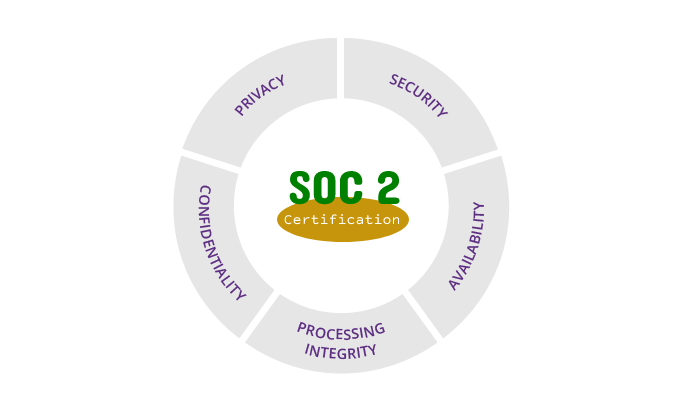
The American Institute of CPAs (AICPA) has developed a set of standards for SOC compliance, which are known as the Trust Services Principles (TSPs). The TSPs are a set of principles that service providers must follow to ensure that their controls are adequate to meet their customers' needs. The TSPs are divided into five categories: security, availability, processing integrity, confidentiality, and privacy.

SOC compliance is a voluntary process, and service providers can choose to undergo a SOC compliance audit at any time. However, some businesses may require SOC compliance as a condition of doing business with them, or they may require SOC compliance as a condition of purchasing their products. In these cases, the service provider will need to undergo a SOC compliance audit to demonstrate that their controls are adequate to meet the needs of their customers.

Three levels of SOC compliance

There are three different levels of SOC (Service Organization Control) compliance: SOC-1, SOC-2, and SOC-3.

SOC-1: Is focused on financial reporting controls. This compliance is relevant for businesses that provide services that impact their clients' financial statements, such as financial institutions or companies that provide payroll processing services.

SOC-2: SOC-2 reports are more comprehensive than SOC-1 reports and are used by service organizations that want to provide assurance to their clients about the effectiveness of their controls over the security, availability, processing integrity, confidentiality, and privacy of their services. This compliance is relevant for businesses that provide services involving the storage, processing, or transmission of sensitive information, such as cloud service providers, data centers, or software as a service (SaaS) providers.

SOC-3: SOC-3 is similar to SOC-2, but with a focus on providing a general overview of a service provider's controls without going into as much detail as SOC-2. SOC-3 reports are less detailed than SOC-2 reports and do not contain detailed descriptions of the controls in place. Instead, they provide a high-level summary of the service organization's controls, which can be shared with a broader audience. SOC-3 compliance is relevant for businesses that want to provide a public-facing assurance report on their controls.

The type of businesses that need each type of SOC compliance will depend on the nature of their services and the requirements of their clients. For example, financial institutions or businesses that provide payroll processing services will likely need SOC-1 compliance, while cloud service providers or SaaS providers will likely need SOC-2 compliance. Businesses that want to provide a public-facing assurance report on their controls may choose to obtain SOC-3 compliance. It is important for businesses to assess their specific needs and the needs of their clients to determine which type of SOC compliance is appropriate. Usually, this is done by consulting with legal representatives and qualified auditors.

Trust Services Criteria

SOC compliance covers five areas, also known as Trust Services Criteria, that are essential for information security. These areas are:

Security: This criterion covers the protection of information and systems against unauthorized access, use, disclosure, modification, and destruction.

Availability: This criterion covers the availability of information and systems to meet the service level agreements (SLAs) agreed upon with customers.

Processing integrity: This criterion covers the completeness, accuracy, timeliness, and validity of data processing.

Confidentiality: This criterion covers the protection of confidential information against unauthorized disclosure.

Privacy: This criterion covers the collection, use, retention, disclosure, and disposal of personal information in accordance with the organization's privacy notice and applicable privacy laws and regulations.

When a service organization undergoes a SOC audit, the auditor evaluates the organization's controls in each of these areas to determine whether they are designed and operating effectively. The auditor then issues a report that describes the organization's controls and provides an opinion on whether the controls are adequate to meet the Trust Services Criteria.

In the next few sections, I will discuss each of these Trust Services Criteria for SOC-2 in more detail.

Security

To meet SOC-2 requirements for security, here are some key areas to consider:

Access controls: Ensure that you have appropriate controls in place to manage access to your AWS environment, including password policies, multi-factor authentication (MFA), and user and group permissions.

Network security: Implement appropriate network security measures, such as firewalls, intrusion detection and prevention systems, and secure communication protocols.

Data encryption: Ensure that data in transit and at rest is properly encrypted using industry-standard encryption methods.

Incident response and monitoring: Have processes in place to detect and respond to security incidents, including log monitoring, threat detection, and incident response plans.

Physical security: It is easy to focus only on technological controls and forget the fact that an uninvited visitor can pose a similar level of risk to your organization if they are easily able to enter your office and gain physical access to your systems. As a rule of thumb, always ensure that physical security controls are in place to protect your offices, warehouses, datacenters, etc. Controls such as, but not limited to, access controls, environmental controls, and monitoring.

Risk management: Implement a formal risk management program that includes regular risk assessments, vulnerability scanning and penetration testing, and incident response testing.

Vendor management: Ensure that any third-party vendors you use are also SOC-2 compliant and that you have appropriate controls in place to manage vendor access and security.

For example, if you are using AWS, it provides many tools and services that can help you meet the requirements. Services such as but not limited to, AWS Identity and Access Management (IAM), AWS CloudTrail, AWS Key Management Service (KMS), AWS Config, AWS CloudWatch, AWS Security Hub, and AWS Shield. It is important to always ensure that these services are properly configured continuously.

Availability

To meet SOC-2 requirements for availability, here are some key areas to consider:

Redundancy and resiliency: Ensure that your AWS infrastructure is designed to be redundant and resilient, with multiple availability zones (AZs) or regions configured to minimize the risk of downtime.

Backup and recovery: Have appropriate backup and recovery processes in place, including regular data backups, and a plan for restoring data and systems in the event of an outage.

Capacity planning: Monitor your AWS environment to ensure that you have sufficient capacity to meet your needs and that you are scaling up or down as needed to maintain performance and availability. It is important to know that not all AWS services are designed to scale up or down automatically and using Cloud does not automatically/magically make your application scalable!

Service level agreements (SLAs): Review and understand the SLAs for any AWS services you are using, and ensure that your use of those services is consistent with the SLAs.

Incident response and monitoring: Have processes in place to detect and respond to availability incidents, including monitoring your AWS environment for issues, and having an incident response plan in place.

For example, if you are using AWS, it provides many tools and services that can help you meet the requirements. Services such as, but not limited to, AWS Elastic Load Balancing (ELB), AWS Auto Scaling, AWS CloudFormation, AWS CloudWatch, and AWS Disaster Recovery. It is important to always ensure that these services are properly configured continuously.

Processing integrity

To meet SOC-2 requirements for processing integrity, here are some key areas to consider:

Data accuracy: Ensure that data processing is accurate, complete, and valid, and that your AWS environment has appropriate controls in place to maintain data accuracy.

Processing completeness: Ensure that data processing is complete, meaning that all necessary data is processed and no data is omitted.

Timeliness: Ensure that data processing is timely, meaning that data is processed in a timely manner and meets any required deadlines.

Validity: Ensure that data processing is valid, meaning that it meets any required criteria or standards, and that data is not altered or manipulated inappropriately.

Error handling: Have appropriate error handling processes in place to address processing errors, including data validation errors and data processing failures.

Incident and Change management: Implement appropriate incident and change management controls to ensure that changes to your infrastructure do not compromise processing integrity and that incidents are properly handled.

Here is a list of some tools you can use (2023):

Confidentiality

To meet SOC-2 requirements for confidentiality, here are some key areas to consider:

Data classification: Classify data according to its sensitivity and ensure that appropriate controls are in place to protect confidential data.

Access controls: Implement appropriate access controls to restrict access to confidential data, including user and group permissions, password policies, and multi-factor authentication (MFA).

Data encryption: Ensure that confidential data is properly encrypted both in transit and at rest, using industry-standard encryption methods.

Data masking: Implement appropriate data masking controls to protect confidential data, such as masking or redaction of sensitive data in logs or reports.

Monitoring and auditing: Monitor access to confidential data and have appropriate auditing controls in place to track access and detect any unauthorized access attempts.

For example, if you are using AWS, it provides many tools and services that can help you meet the requirements. Services such as, but not limited to, AWS Identity and Access Management (IAM), AWS Key Management Service (KMS), AWS CloudTrail, and Amazon ACM. It is important to always ensure that these services are properly configured continuously.

Privacy

To meet SOC-2 requirements for privacy, here are some key areas to consider:

Data collection and use: Ensure that you have appropriate policies and procedures in place for collecting and using personal information in compliance with applicable privacy laws and regulations.

Data retention and disposal: Implement appropriate controls to ensure that personal information is retained only for as long as necessary and is disposed of securely when no longer needed.

Data access controls: Implement appropriate access controls to restrict access to personal information, including user and group permissions, password policies, and multi-factor authentication (MFA).

Data encryption: Ensure that personal information is properly encrypted both in transit and at rest, using industry-standard encryption methods.

Monitoring and auditing: Monitor access to personal information and have appropriate auditing controls in place to track access and detect any unauthorized access attempts.

For example, if you are using AWS, it provides many tools and services that can help you meet the requirements. Services such as, but not limited to, AWS Identity and Access Management (IAM), AWS Key Management Service (KMS), Amazon Macie, AWS CloudTrail, and Amazon Virtual Private Cloud (VPC). It is important to always ensure that these services are properly configured continuously.

Additionally, you should also ensure that you have appropriate policies and procedures in place for handling personal information and that you are keeping up to date with changes to applicable privacy laws and regulations.

Difference between SOC-1 and SOC-2

The main difference between SOC-1 and SOC-2 reports is the focus of the controls being evaluated.

SOC-1 reports are designed to evaluate the effectiveness of controls at a service organization that is relevant to the user entities' financial reporting. These controls are typically related to financial transactions or processes, such as accounts payable or payroll processing. The report provides assurance that the service organization's controls are designed and operating effectively to ensure the accuracy and completeness of the financial information that is processed on behalf of its clients.

In contrast, SOC-2 reports are designed to evaluate the effectiveness of controls at a service organization that is related to the security, availability, processing integrity, confidentiality, and privacy of the systems used to process data. The report provides assurance to clients and stakeholders that the service organization has implemented effective controls to ensure the security, availability, processing integrity, confidentiality, and privacy of its systems.

Another key difference between SOC-1 and SOC-2 reports is the audience they are intended for. SOC-1 reports are typically used by user entities' auditors to help evaluate the financial reporting controls of the service organization, while SOC-2 reports are used by a broader range of stakeholders, including management, regulators, and clients who are interested in understanding the service organization's security and data protection controls.

In summary, SOC-1 reports focus on controls related to financial reporting, while SOC-2 reports focus on controls related to security, availability, processing integrity, confidentiality, and privacy of the systems used to process data. Additionally, SOC-1 reports are intended for use by user entities' auditors, while SOC-2 reports are used by a broader range of stakeholders.
If you liked the article, feel free to share it with your friends, family, or colleagues. You can also follow me on Medium or LinkedIn.

Copyright & Disclaimer

  • All content provided on this article is for informational and educational purposes only. The author makes no representations as to the accuracy or completeness of any information on this site or found by following any link on this site.
  • All the content is copyrighted, except the assets and content I have referenced to other people's work, and may not be reproduced on other websites, blogs, or social media. You are not allowed to reproduce, summarize to create derivative work, or use any content from this website under your name. This includes creating a similar article or summary based on AI/GenAI. For educational purposes, you may refer to parts of the content, and only refer, but you must provide a link back to the original article on this website. This is allowed only if your content is less than 10% similar to the original article.
  • While every care has been taken to ensure the accuracy of the content of this website, I make no representation as to the accuracy, correctness, or fitness for any purpose of the site content, nor do I accept any liability for loss or damage (including consequential loss or damage), however, caused, which may be incurred by any person or organization from reliance on or use of information on this site.
  • The contents of this article should not be construed as legal advice.
  • Opinions are my own and not the views of my employer.
  • English is not my mother-tongue language, so even though I try my best to express myself correctly, there might be a chance of miscommunication.
  • Links or references to other websites, including the use of information from 3rd-parties, are provided for the benefit of people who use this website. I am not responsible for the accuracy of the content on the websites that I have put a link to and I do not endorse any of those organizations or their contents.
  • If you have any queries or if you believe any information on this article is inaccurate, or if you think any of the assets used in this article are in violation of copyright, please contact me and let me know.

A basic guide to becoming SOC-2 compliant

A basic guide to becoming SOC-2 compliant
Published: March 3, 2023

Basic guide to become SOC-2 compliant

SOC-2 TSC

What is SOC compliance?

SOC compliance is a type of attestation report that provides assurance to customers that a service provider's controls are adequate to meet their needs. SOC compliance is relevant for businesses that provide services to other businesses, such as cloud service providers, data centers, software as a service (SaaS) providers, and managed service providers.

The American Institute of CPAs (AICPA) has developed a set of standards for SOC compliance, which are known as the Trust Services Principles (TSPs). The TSPs are a set of principles that service providers must follow to ensure that their controls are adequate to meet their customers' needs. The TSPs are divided into five categories: security, availability, processing integrity, confidentiality, and privacy.

SOC compliance is a voluntary process, and service providers can choose to undergo a SOC compliance audit at any time. However, some businesses may require SOC compliance as a condition of doing business with them, or they may require SOC compliance as a condition of purchasing their products. In these cases, the service provider will need to undergo a SOC compliance audit to demonstrate that their controls are adequate to meet the needs of their customers.

Three levels of SOC compliance

There are three different levels of SOC (Service Organization Control) compliance: SOC-1, SOC-2, and SOC-3.

SOC-1: Is focused on financial reporting controls. This compliance is relevant for businesses that provide services that impact their clients' financial statements, such as financial institutions or companies that provide payroll processing services.

SOC-2: SOC-2 reports are more comprehensive than SOC-1 reports and are used by service organizations that want to provide assurance to their clients about the effectiveness of their controls over the security, availability, processing integrity, confidentiality, and privacy of their services. This compliance is relevant for businesses that provide services involving the storage, processing, or transmission of sensitive information, such as cloud service providers, data centers, or software as a service (SaaS) providers.

SOC-3: SOC-3 is similar to SOC-2, but with a focus on providing a general overview of a service provider's controls without going into as much detail as SOC-2. SOC-3 reports are less detailed than SOC-2 reports and do not contain detailed descriptions of the controls in place. Instead, they provide a high-level summary of the service organization's controls, which can be shared with a broader audience. SOC-3 compliance is relevant for businesses that want to provide a public-facing assurance report on their controls.

The type of businesses that need each type of SOC compliance will depend on the nature of their services and the requirements of their clients. For example, financial institutions or businesses that provide payroll processing services will likely need SOC-1 compliance, while cloud service providers or SaaS providers will likely need SOC-2 compliance. Businesses that want to provide a public-facing assurance report on their controls may choose to obtain SOC-3 compliance. It is important for businesses to assess their specific needs and the needs of their clients to determine which type of SOC compliance is appropriate. Usually, this is done by consulting with legal representatives and qualified auditors.

Trust Services Criteria

SOC compliance covers five areas, also known as Trust Services Criteria, that are essential for information security. These areas are:

Security: This criterion covers the protection of information and systems against unauthorized access, use, disclosure, modification, and destruction.

Availability: This criterion covers the availability of information and systems to meet the service level agreements (SLAs) agreed upon with customers.

Processing integrity: This criterion covers the completeness, accuracy, timeliness, and validity of data processing.

Confidentiality: This criterion covers the protection of confidential information against unauthorized disclosure.

Privacy: This criterion covers the collection, use, retention, disclosure, and disposal of personal information in accordance with the organization's privacy notice and applicable privacy laws and regulations.

When a service organization undergoes a SOC audit, the auditor evaluates the organization's controls in each of these areas to determine whether they are designed and operating effectively. The auditor then issues a report that describes the organization's controls and provides an opinion on whether the controls are adequate to meet the Trust Services Criteria.

In the next few sections, I will discuss each of these Trust Services Criteria for SOC-2 in more detail.

Security

To meet SOC-2 requirements for security, here are some key areas to consider:

Access controls: Ensure that you have appropriate controls in place to manage access to your AWS environment, including password policies, multi-factor authentication (MFA), and user and group permissions.

Network security: Implement appropriate network security measures, such as firewalls, intrusion detection and prevention systems, and secure communication protocols.

Data encryption: Ensure that data in transit and at rest is properly encrypted using industry-standard encryption methods.

Incident response and monitoring: Have processes in place to detect and respond to security incidents, including log monitoring, threat detection, and incident response plans.

Physical security: It is easy to focus only on technological controls and forget the fact that an uninvited visitor can pose a similar level of risk to your organization if they are easily able to enter your office and gain physical access to your systems. As a rule of thumb, always ensure that physical security controls are in place to protect your offices, warehouses, datacenters, etc. Controls such as, but not limited to, access controls, environmental controls, and monitoring.

Risk management: Implement a formal risk management program that includes regular risk assessments, vulnerability scanning and penetration testing, and incident response testing.

Vendor management: Ensure that any third-party vendors you use are also SOC-2 compliant and that you have appropriate controls in place to manage vendor access and security.

For example, if you are using AWS, it provides many tools and services that can help you meet the requirements. Services such as but not limited to, AWS Identity and Access Management (IAM), AWS CloudTrail, AWS Key Management Service (KMS), AWS Config, AWS CloudWatch, AWS Security Hub, and AWS Shield. It is important to always ensure that these services are properly configured continuously.

Availability

To meet SOC-2 requirements for availability, here are some key areas to consider:

Redundancy and resiliency: Ensure that your AWS infrastructure is designed to be redundant and resilient, with multiple availability zones (AZs) or regions configured to minimize the risk of downtime.

Backup and recovery: Have appropriate backup and recovery processes in place, including regular data backups, and a plan for restoring data and systems in the event of an outage.

Capacity planning: Monitor your AWS environment to ensure that you have sufficient capacity to meet your needs and that you are scaling up or down as needed to maintain performance and availability. It is important to know that not all AWS services are designed to scale up or down automatically and using Cloud does not automatically/magically make your application scalable!

Service level agreements (SLAs): Review and understand the SLAs for any AWS services you are using, and ensure that your use of those services is consistent with the SLAs.

Incident response and monitoring: Have processes in place to detect and respond to availability incidents, including monitoring your AWS environment for issues, and having an incident response plan in place.

For example, if you are using AWS, it provides many tools and services that can help you meet the requirements. Services such as, but not limited to, AWS Elastic Load Balancing (ELB), AWS Auto Scaling, AWS CloudFormation, AWS CloudWatch, and AWS Disaster Recovery. It is important to always ensure that these services are properly configured continuously.

Processing integrity

To meet SOC-2 requirements for processing integrity, here are some key areas to consider:

Data accuracy: Ensure that data processing is accurate, complete, and valid, and that your AWS environment has appropriate controls in place to maintain data accuracy.

Processing completeness: Ensure that data processing is complete, meaning that all necessary data is processed and no data is omitted.

Timeliness: Ensure that data processing is timely, meaning that data is processed in a timely manner and meets any required deadlines.

Validity: Ensure that data processing is valid, meaning that it meets any required criteria or standards, and that data is not altered or manipulated inappropriately.

Error handling: Have appropriate error handling processes in place to address processing errors, including data validation errors and data processing failures.

Incident and Change management: Implement appropriate incident and change management controls to ensure that changes to your infrastructure do not compromise processing integrity and that incidents are properly handled.

Here is a list of some tools you can use (2023):

Confidentiality

To meet SOC-2 requirements for confidentiality, here are some key areas to consider:

Data classification: Classify data according to its sensitivity and ensure that appropriate controls are in place to protect confidential data.

Access controls: Implement appropriate access controls to restrict access to confidential data, including user and group permissions, password policies, and multi-factor authentication (MFA).

Data encryption: Ensure that confidential data is properly encrypted both in transit and at rest, using industry-standard encryption methods.

Data masking: Implement appropriate data masking controls to protect confidential data, such as masking or redaction of sensitive data in logs or reports.

Monitoring and auditing: Monitor access to confidential data and have appropriate auditing controls in place to track access and detect any unauthorized access attempts.

For example, if you are using AWS, it provides many tools and services that can help you meet the requirements. Services such as, but not limited to, AWS Identity and Access Management (IAM), AWS Key Management Service (KMS), AWS CloudTrail, and Amazon ACM. It is important to always ensure that these services are properly configured continuously.

Privacy

To meet SOC-2 requirements for privacy, here are some key areas to consider:

Data collection and use: Ensure that you have appropriate policies and procedures in place for collecting and using personal information in compliance with applicable privacy laws and regulations.

Data retention and disposal: Implement appropriate controls to ensure that personal information is retained only for as long as necessary and is disposed of securely when no longer needed.

Data access controls: Implement appropriate access controls to restrict access to personal information, including user and group permissions, password policies, and multi-factor authentication (MFA).

Data encryption: Ensure that personal information is properly encrypted both in transit and at rest, using industry-standard encryption methods.

Monitoring and auditing: Monitor access to personal information and have appropriate auditing controls in place to track access and detect any unauthorized access attempts.

For example, if you are using AWS, it provides many tools and services that can help you meet the requirements. Services such as, but not limited to, AWS Identity and Access Management (IAM), AWS Key Management Service (KMS), Amazon Macie, AWS CloudTrail, and Amazon Virtual Private Cloud (VPC). It is important to always ensure that these services are properly configured continuously.

Additionally, you should also ensure that you have appropriate policies and procedures in place for handling personal information and that you are keeping up to date with changes to applicable privacy laws and regulations.

Difference between SOC-1 and SOC-2

The main difference between SOC-1 and SOC-2 reports is the focus of the controls being evaluated.

SOC-1 reports are designed to evaluate the effectiveness of controls at a service organization that is relevant to the user entities' financial reporting. These controls are typically related to financial transactions or processes, such as accounts payable or payroll processing. The report provides assurance that the service organization's controls are designed and operating effectively to ensure the accuracy and completeness of the financial information that is processed on behalf of its clients.

In contrast, SOC-2 reports are designed to evaluate the effectiveness of controls at a service organization that is related to the security, availability, processing integrity, confidentiality, and privacy of the systems used to process data. The report provides assurance to clients and stakeholders that the service organization has implemented effective controls to ensure the security, availability, processing integrity, confidentiality, and privacy of its systems.

Another key difference between SOC-1 and SOC-2 reports is the audience they are intended for. SOC-1 reports are typically used by user entities' auditors to help evaluate the financial reporting controls of the service organization, while SOC-2 reports are used by a broader range of stakeholders, including management, regulators, and clients who are interested in understanding the service organization's security and data protection controls.

In summary, SOC-1 reports focus on controls related to financial reporting, while SOC-2 reports focus on controls related to security, availability, processing integrity, confidentiality, and privacy of the systems used to process data. Additionally, SOC-1 reports are intended for use by user entities' auditors, while SOC-2 reports are used by a broader range of stakeholders.

If you liked the article, feel free to share it with your friends, family, or colleagues. You can also follow me on Medium or LinkedIn.

Copyright & Disclaimer

  • All content provided on this article is for informational and educational purposes only. The author makes no representations as to the accuracy or completeness of any information on this site or found by following any link on this site.
  • All the content is copyrighted, except the assets and content I have referenced to other people's work, and may not be reproduced on other websites, blogs, or social media. You are not allowed to reproduce, summarize to create derivative work, or use any content from this website under your name. This includes creating a similar article or summary based on AI/GenAI. For educational purposes, you may refer to parts of the content, and only refer, but you must provide a link back to the original article on this website. This is allowed only if your content is less than 10% similar to the original article.
  • While every care has been taken to ensure the accuracy of the content of this website, I make no representation as to the accuracy, correctness, or fitness for any purpose of the site content, nor do I accept any liability for loss or damage (including consequential loss or damage), however, caused, which may be incurred by any person or organization from reliance on or use of information on this site.
  • The contents of this article should not be construed as legal advice.
  • Opinions are my own and not the views of my employer.
  • English is not my mother-tongue language, so even though I try my best to express myself correctly, there might be a chance of miscommunication.
  • Links or references to other websites, including the use of information from 3rd-parties, are provided for the benefit of people who use this website. I am not responsible for the accuracy of the content on the websites that I have put a link to and I do not endorse any of those organizations or their contents.
  • If you have any queries or if you believe any information on this article is inaccurate, or if you think any of the assets used in this article are in violation of copyright, please contact me and let me know.
Copyright © 2025 - pooyan.info