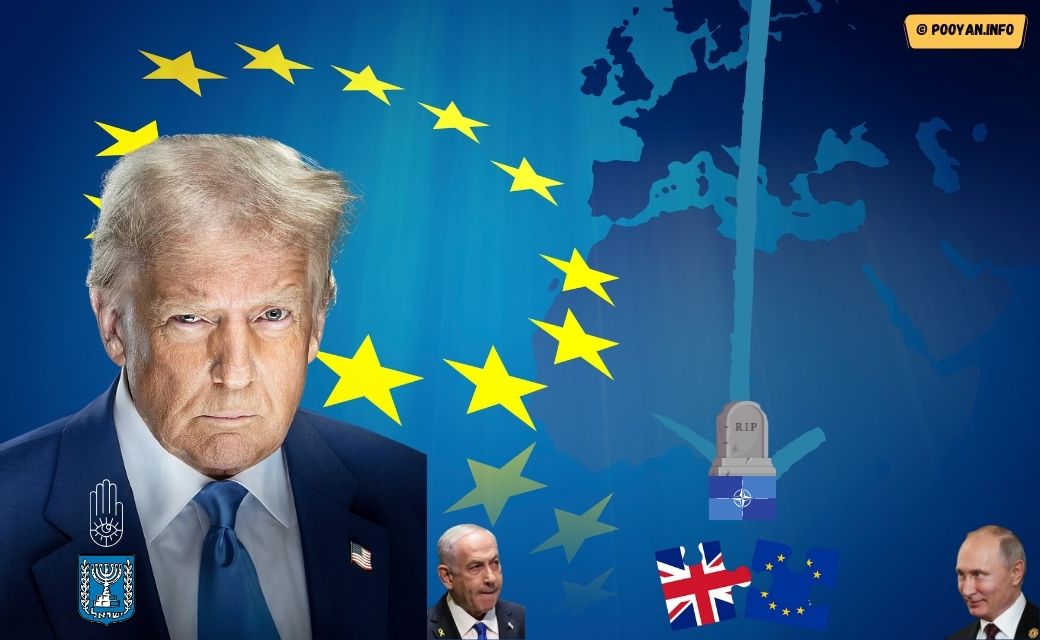
Brexit was the first round of throwing Europe under the bus
Theory: After having lived in Europe for a few years, I can easily say that Europeans are very easy to believe in any of the "supremest" ideologies that could be used to show them that they are better than others.
That's why they were trapped into WWI and WWII, and later accepted to let Ukraine give up its nuclear weapons to Russia and the US, in exchange for security assurances. That's why they have been blindly helping the US under the name of NATO to invade other countries, create or support t3rrorist groups like ISIS, Taliban, MEK (Mojahhedin-e Khalgh), and many others.
Even though NATO is supposed to be a homogeneous alliance, security-wise, UK's intelligence were closer to the US than the rest of the EU countries, due to the secret programs they had together with NSA (based on what Snowden revealed). With that in mind, it is not hard to understand when the UK left the EU, and basically showed the middle finger to the alliance, they were running away from a bigger mess that was about to happen.
Was it the war of Russia? Or was it even a bigger thing?
Who was behind it?
Theory: The international mafia of ZiØn1sts who own the world through their corrupt financial system. They own the media, the banks, and the governments.
Disclaimer
I am not a politician or a paid analyst, but an open-minded person who sees things from different angels. This article is a pure analysis based on the events happened before and after Brexit, and the current situation of the US, UK, Russia, Israel, and the EU. This article mentions Izrael, and we all know that they are a collective of international Zio-fa$scist Mafia-like gangs, who easily eliminate anyone who stands against them. They have no fear of being caught, because they own the media, the banks, and the governments.
Now, let's take a look at the chronology of events that happened before and after Brexit and the reasons behind this theory.
What happened before Brexit
2013
January 23: UK Prime Minister David Cameron promises an in/out referendum on EU membership if the Conservative Party wins the next general election.

2015
May 7: The Conservative Party wins a majority in the general election, paving the way for the referendum.
June 15: The European Union Referendum Act 2015 is passed, setting the stage for the vote.
2016
February 20: David Cameron announces the referendum will be held on June 23, 2016.
Campaign Period:
- The "Remain" campaign (supported by Cameron, Chancellor George Osborne, and Labour leader Jeremy Corbyn) argues that leaving the EU would harm the UK economy.
- The "Leave" campaign (led by Boris Johnson, Michael Gove, and Nigel Farage) focuses on regaining sovereignty, controlling immigration, and reducing EU bureaucracy.
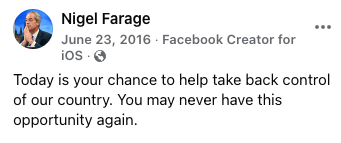
June 16: Labour MP Jo Cox, a strong advocate for remaining in the EU, is murdered by a far-right extremist.
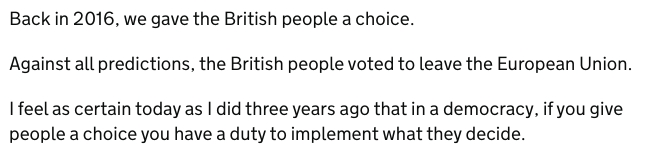
June 23: The UK votes to leave the EU by 51.9% to 48.1%.
June 24: David Cameron resigns as Prime Minister, stating, “I do not think it would be right for me to be the captain that steers our country to its next destination.”
July 13: Theresa May becomes Prime Minister after leadership contests within the Conservative Party.
2017
March 29: Theresa May triggers Article 50, formally beginning the two-year countdown to Brexit.
June 8: Theresa May calls a snap general election but loses her parliamentary majority, weakening her negotiating position.
December 8: The UK and EU agree on the first phase of Brexit negotiations, including citizens’ rights and the Irish border.
2018
July 6: The UK Cabinet agrees to the Chequers Plan, a proposal for future UK-EU relations, but it faces significant backlash from Brexit hardliners.
November 14: The UK and EU agree on a draft withdrawal agreement, but it is criticized for the Irish backstop (a provision to prevent a hard border between Northern Ireland and the Republic of Ireland).
2019
January 15: Theresa May’s Brexit deal is overwhelmingly rejected by Parliament in the first “meaningful vote.”
March 29: The original Brexit deadline passes without a deal.
May 24: Theresa May announces her resignation, effective June 7.

July 24: Boris Johnson becomes Prime Minister, vowing to deliver Brexit by October 31.
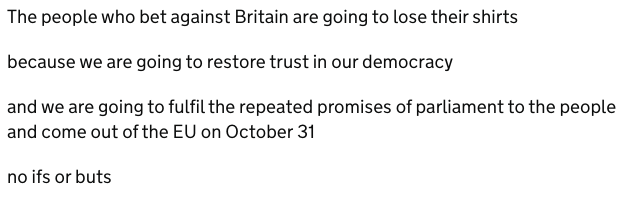
October 17: Boris Johnson negotiates a revised withdrawal agreement with the EU, removing the Irish backstop and replacing it with the Northern Ireland Protocol. October 19: Parliament passes the Benn Act, forcing Johnson to request a Brexit extension if no deal is approved. October 22: Parliament approves the withdrawal agreement in principle but rejects the accelerated timetable, leading to another extension. December 12: Boris Johnson wins a decisive majority in the general election, promising to “get Brexit done.”
What happened after Brexit
2020January 31: The UK formally leaves the EU at 11:00 PM GMT.
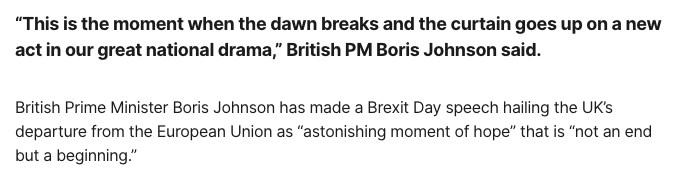
December 24: The UK and EU agree on the Trade and Cooperation Agreement, avoiding a no-deal Brexit.
2021January 1: The Brexit transition period ends, and the UK fully leaves the EU single market and customs union.
Ongoing Issues: Disputes over the Northern Ireland Protocol and fishing rights create tensions between the UK and EU.
2022June: The UK government introduces the Northern Ireland Protocol Bill, seeking to unilaterally override parts of the agreement, sparking criticism from the EU. September 6: Liz Truss becomes Prime Minister after Boris Johnson resigns amid scandals. October 25: Rishi Sunak becomes Prime Minister after Liz Truss resigns following economic turmoil.
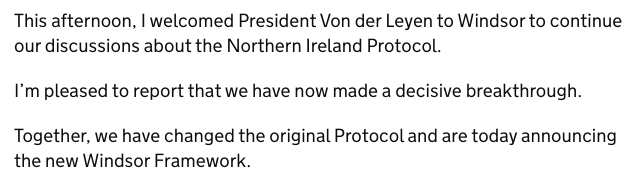
2023February 27: The UK and EU agree on the Windsor Framework, revising the Northern Ireland Protocol to ease trade barriers.
Earlier related events
December 25, 1991: The Soviet Union collapses, ending the Cold War and leading to the emergence of new independent states.
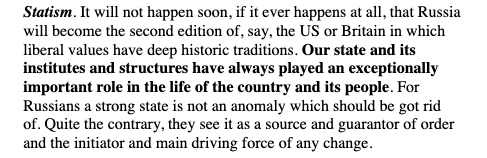
March 26, 2000: Vladimir Putin is elected President of Russia, beginning his long tenure in power.
September 11, 2001: The 9/11 t3rrorist attacks in the US lead to a global war on "a new enemy", involving the UK and NATO allies. Previously in this article I had mentioned that I watched a documentary that could prove Izrael was most likely behind 9/11; But I cannot either confirm or deny it. I suggest you watch it yourself before it is censored, and make your own decision.
March 20, 2003: The US and UK invade Iraq, leading to the ousting of Saddam Hussein and the destabilization of the region.
A few days later, the UN secretary general, Kofi Annan, declared the Iraq war illegal.
April 30, 2003: The US-backed Roadmap for Peace is proposed for Israel-Palestine, in cooperation with Russia, the European Union, and the United Nations (the Quartet). However, the roadmap was never implemented, and led to more Izraeli settlements, violations, and a mass genocide.
July 12, 2006: Israel invaded Lebanon, with the help of The US and UK, while Russia called for a ceasefire.
August 8, 2008: Russia and Georgia engage in a brief war over the breakaway region of South Ossetia, signaling a more assertive foreign policy. The US and UK condemn the action.
September 15, 2008: The Lehman Brothers collapse triggers a global financial crisis, leading to economic turmoil.
November 4, 2008: Barack Obama is elected President of the United States, promising to “reset” relations with Russia.
June 2010: The UK Conservative-Liberal Democrat coalition government under David Cameron takes office, emphasizing austerity and a more Eurosceptic tone.
March 2011: The Western-backed "Arab Spring" uprising projects begin, leading to instability in the Middle East. The US and UK support regime change in Libya, while Russia opposes foreign intervention.
March 2014: Russia annexes Crimea from Ukraine, leading to international condemnation and sanctions. The US and UK support Ukraine, while Russia argues it is protecting Russian-speaking populations.
July 8, 2014: Izrael invade Gaza (Operation Protective Edge) where IDF killed more than 2 thousand Palestinians and injured more than 10 thousand (including 3,374 children, of whom over 1,000 were left permanently disabled) The US and UK supported this illegal invasion.
Dissolution of the Soviet Union
The dissolution of the Soviet Union (USSR) in 1991 led to several key agreements and understandings involving Russia, Ukraine, NATO, and other parties. Here are the most relevant ones:
Belovezha Accords (December 8, 1991)
- Between: Russia, Ukraine, and Belarus
- Formally declared the dissolution of the USSR.
- Established the Commonwealth of Independent States (CIS).
- Recognized the independence of former Soviet republics.
Alma-Ata Protocol (December 21, 1991)
- Between: 11 former Soviet republics (including Russia and Ukraine)
- Confirmed the USSR’s dissolution.
- Russia was recognized as the legal successor of the USSR, inheriting its UN Security Council seat.
- Former Soviet republics agreed to cooperate on security and nuclear weapons issues.
** Lisbon Protocol** (May 23, 1992)
- Between: Russia, Ukraine, Belarus, Kazakhstan, U.S.
- Ukraine, Belarus, and Kazakhstan agreed to transfer all Soviet-era nuclear weapons to Russia.
- These countries joined the Non-Proliferation Treaty (NPT) as non-nuclear states.
- The U.S. and Russia provided security assurances.
** Budapest Memorandum** (December 5, 1994)
- Between: Ukraine, Russia, US, UK
- Ukraine gave up its nuclear weapons in exchange for security assurances.
- Russia, the U.S., and the U.K. promised to respect Ukraine’s territorial integrity and sovereignty.
- No military or economic pressure would be used against Ukraine.
- Significance: Russia’s annexation of Crimea in 2014 violated this agreement.
** NATO’s Expansion Assurances** (1990-1991)
- Between: US, NATO, Soviet Union (Russia after 1991)
- Western officials (notably U.S. Secretary of State James Baker) discussed the possibility of NATO not expanding eastward if the USSR allowed Germany’s reunification.
- There was no formal treaty, but Soviet leaders (including Mikhail Gorbachev) later claimed they were given verbal assurances.
- Controversy: NATO did expand eastward in later years, which Russia viewed as a betrayal of these assurances.
NATO expansions near Russia
Since the early 1990s, NATO has expanded eastward despite earlier verbal assurances to Soviet leadership that it would not move "an inch east." This expansion was perceived by Russia as a growing threat to its national security and regional influence.
1999: Poland, Hungary, and the Czech Republic join NATO—former members of the Warsaw Pact.
2004: The biggest single wave of expansion—Bulgaria, Estonia, Latvia, Lithuania, Romania, Slovakia, and Slovenia join.
2009: Albania and Croatia become NATO members.
2017: Montenegro joins NATO despite strong objections from Russia.
2020: North Macedonia joins.
Context: Many of these countries were either part of the Soviet Union or its sphere of influence. For Russia, the integration of these states into NATO—and particularly the possibility of Ukraine or Georgia joining—was viewed as a direct encroachment on its borders.
2014 and after: NATO steps up military presence near Russian borders with increased exercises, troop deployments, and missile defenses in Eastern Europe, escalating tensions further.
First attack on Ukraine
February 2014: Following the Euromaidan protests, Ukrainian President Viktor Yanukovych is ousted. A Western-backed interim government takes power in Kyiv.
March 2014: In response, Russia annexes Crimea after a controversial referendum, claiming to protect ethnic Russians and strategic interests. The West calls it illegal and imposes sanctions.
April 2014: Armed conflict breaks out in Eastern Ukraine (Donbas region), where Russian-backed separatists declare independence in Donetsk and Luhansk.
2015: The Minsk II agreement is signed to halt fighting, but violations from both sides persist, and a frozen conflict continues for years.
Motivations: Russia accused NATO and the US of orchestrating a coup in Kyiv. The West accused Russia of violating Ukraine’s sovereignty. In reality, Ukraine became a pawn in the larger geopolitical struggle between Russia and the West.
Second attack on Ukraine
February 24, 2022: Russia launches a full-scale invasion of Ukraine, calling it a “special military operation” aimed at "denazifying" Ukraine and protecting the Donbas region.
Western response: The US, UK, and EU respond with sweeping sanctions against Russia, send billions in military and financial aid to Ukraine, and flood media with support for Kyiv.
But what triggered it? - NATO's continuous expansion and Ukraine's increasing cooperation with the West alarmed Moscow. - The US and UK ignored Russia's warnings, pushing for Ukrainian NATO membership. - Israel remained silent or ambiguous, while continuing its own aggressions in Palestine. Here are a few videos to watch: #1, #2,
Result: A prolonged war with hundreds of thousands of casualties, millions of refugees, economic fallout across Europe, and skyrocketing energy prices. Meanwhile, military-industrial complexes in the West profited.
Economical impacts of all these wars on the West
When Netanyahu pushed the US in the Iraq war, noe one thought the biggest economy in the world would be impacted, but in 2008, beginning under the name of the Lehman Brothers collapse, a big financial crisis hit the US and later every other counties who relied on USD and Izraeli-mob-backed US banking system.
With all the wars that Izrael and the US went into, together with NATO, and with all the refugees that they created by their stupid wars, Europeans began to question their governments. And gradually, UK started to think about leaving this mess that they had created in Europe together with the US.
Later, when Corona hit, Western countries started to print crazy amounts of money, backed by the US banking system. Later, that led the inflation to rise.
When Russia attacked Ukraine, the US and Europe invested billions of dollars in the war. That led to more inflation and economic turmoil.
It was Israel's invasion of Palestine, that hit the last nail of the coffin. That led to Trump's plan to negotiate with Putin and leave Europe to its own fate.
Meanwhile, China was growing in peace...
Will they attack China? Or the next target is...
As you see in this video Kaja Kallas, the EU's Chief Diplomat, says that if the West collectively is not able to really pressure Russia effectively, how can they pressure China, which has much more economic power and military advancements?
WIP
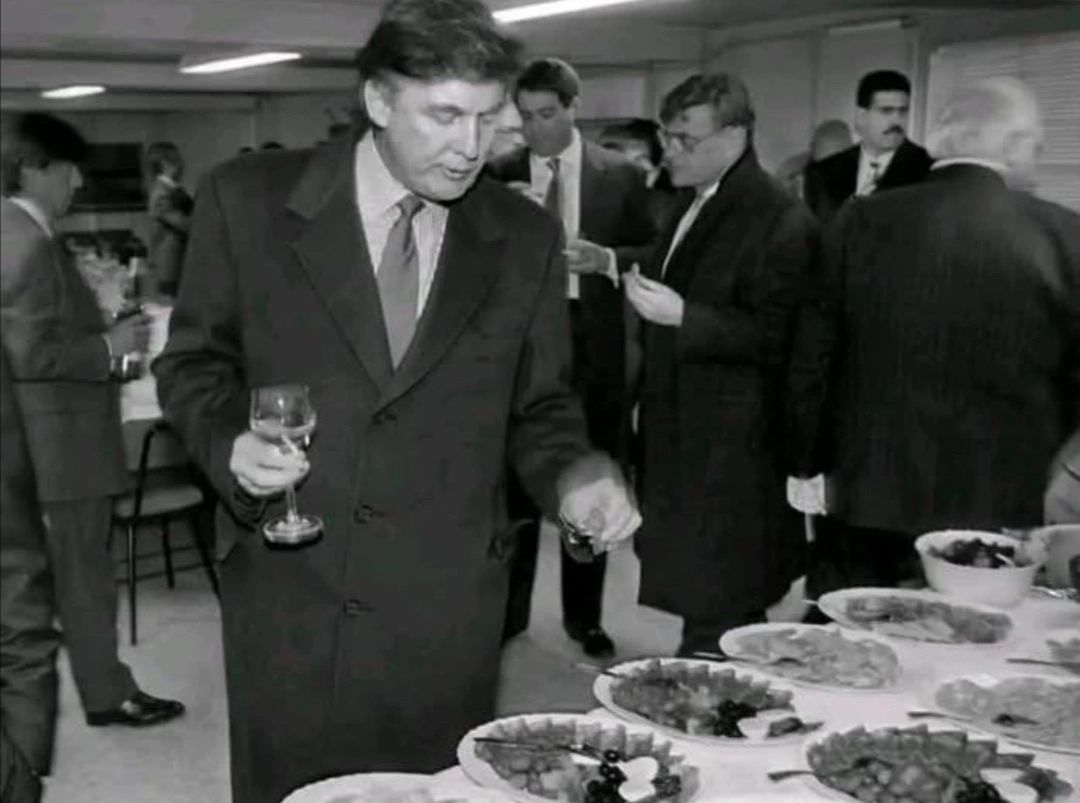
Here we see 41-year-old Donald Trump in Moscow, July 1987, invited by the Soviet Ambassador. At first glance, just another business trip—but was it more?
Former KGB officials, including Yuri Shvets, claim this visit was part of a Soviet strategy to cultivate Trump as a potential asset. Just two months after returning to New York, Trump paid nearly $100,000 for full-page ads in major newspapers, urging the U.S. to abandon its allies and let them fend for themselves. Sound familiar?
Fast forward to the 2000s:
🔍 The Trump Organization sold numerous properties to anonymous shell companies—many linked to Russian oligarchs.
🔍 In 2008, Trump sold his Palm Beach estate, Maison de L'Amitié, to Russian billionaire Dmitry Rybolovlev for $95
million—nearly double its market value.
WIP
https://x.com/i/status/1896775327655112992
https://x.com/i/status/1896634742889734401
https://x.com/i/status/1897091330817331583
https://x.com/i/status/1897097192210620731
https://x.com/i/status/1897046013296394577
https://x.com/i/status/1896642022670225648
https://x.com/i/status/1896958984147644921
https://x.com/i/status/1896916798379004307
https://x.com/i/status/1896678791696744725
https://x.com/beh_mask/status/1896645051629158736/photo/1
https://x.com/i/status/1896857418900046186
https://x.com/i/status/1896283237124898922
https://x.com/i/status/1896020572498436360
https://x.com/i/status/1896047394418278881
https://x.com/i/status/1896805994837184525
https://x.com/i/status/1896642022670225648
https://x.com/i/status/1894154145994600957
https://x.com/i/status/1894067129386701020
https://x.com/i/status/1894328675316711895
https://x.com/i/status/1894244505563332672
https://x.com/i/status/1894029583365579216
https://x.com/i/status/1894203889034899456
https://x.com/i/status/1894173018361885092
https://x.com/i/status/1894187943297728750
https://x.com/i/status/1894177961139384725
https://x.com/i/status/1894164357384163684
https://x.com/i/status/1894225808299893183
https://x.com/i/status/1893640093866377510
https://x.com/i/status/1893667512136376330
https://x.com/i/status/1893070501469143342
https://x.com/i/status/1892926858850636047
https://x.com/i/status/1893028801182904630
https://x.com/i/status/1892517452614922633
https://x.com/i/status/1892335371595178049
https://x.com/GUnderground_TV/status/1891556919678030049
Ukraine:
https://x.com/i/status/1721870735948275827
https://x.com/i/status/1895794977172500565
https://x.com/i/status/1895603052167483775
https://x.com/i/status/1895621029193797677
https://x.com/i/status/1895393915517493470
https://x.com/i/status/1895264191264833910
https://x.com/i/status/1895472424134619311
https://pbs.twimg.com/media/Gk6qVK4WAAAQjIy?format=jpg&name=large
https://x.com/i/status/1895563470688698432
Ukraine: (beginning of the war)
https://x.com/i/status/1895556844128780305
Bush speech about Ukraine: (initiated the NATO/Russia conflict)
https://x.com/i/status/1895782814471360896
https://x.com/i/status/1895633328491172321
Ukraine Trump:
https://x.com/i/status/1895874340761333958
https://x.com/i/status/1896020572498436360
https://x.com/i/status/1896126697583550657
https://x.com/Partisan_12/status/1895892333092364624/photo/1
https://pbs.twimg.com/media/Gk9J4jJXcAAy5VF?format=jpg&name=small
https://pbs.twimg.com/media/Gk5z0_qWgAA3E8M?format=jpg&name=small
https://pbs.twimg.com/media/Gk8mTP-XcAA1DSO?format=jpg&name=small
https://x.com/i/status/1895794977172500565
https://x.com/i/status/1895874340761333958
https://x.com/i/status/1895926855599079909
https://x.com/i/status/1895795956932886964
https://x.com/Final__battle/status/1895861089042346115/photo/1
China:
https://x.com/i/status/1893601789347541335