Pooyan Razian

Gender diversity at work: Denmark🇩🇰 vs Iran🇮🇷

Gender diversity at work: Denmark🇩🇰 vs Iran🇮🇷
Published: June 27, 2023

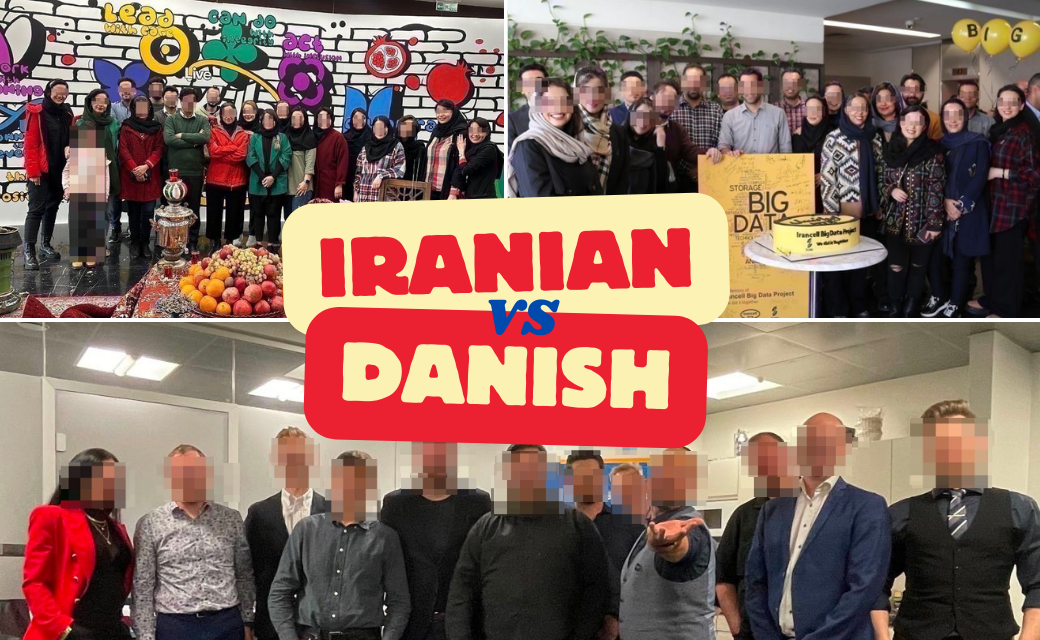
As a software developer and a person who is experienced with IT infrastructure, back then, when I was residing in Iran, I was happy to work in our IT teams where almost half of the technical staff and managers were women (example photos below). This could reduce the stress and tension in our teams and make the work environment more enjoyable.

Below is a typical Iranian IT team (I just searched public posts on LinkedIn and this was the first result):
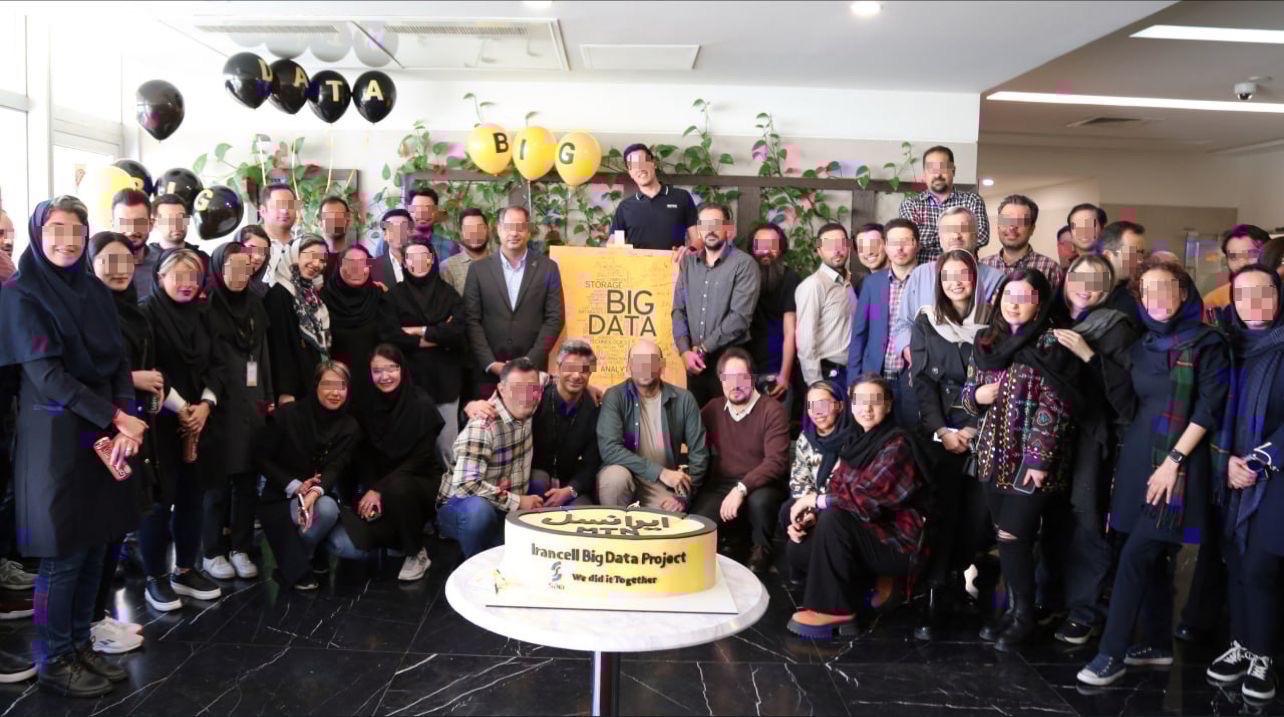
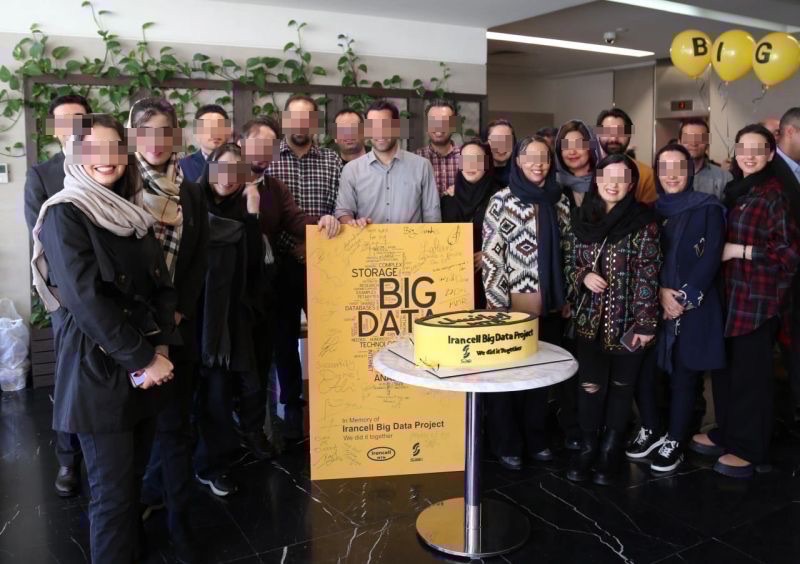
17 female | 26 male | Source

10 female | 10 male | Source

14 female | 5 male | Source

Note: Even though all the photos are gathered from public posts on LinkedIn, I have blurred people's eyes/faces to respect people's privacy. This article is not about specific people or companies but is a generic comparison between the two countries regarding gender diversity at work. This article is written for educational purposes, so to avoid personal bias, I randomly selected some of these images from a fresh search result, and the rest are gathered from different sources to support facts.

Warning: You might not like this article if you don't like Iran, Iranian women, or Iranian men, or if you support far-right extremist politicians who have gained power by spreading misinformation and hatred. So continue only if you are open-minded and can tolerate facing the truth.

OK, let's continue...

When I moved to Denmark, I thought, ok! If I am moving from a 3rd-world "developing" country to a "developed" one in Europe, which is named the "happiest country in the world!", then I should expect to see more diversity at work, right?

But surprisingly, since then, I have seen almost NO Danish women in this industry (except one)! (hands-on software developer, data scientist, data engineer, DevOps/DevSecOps engineer, etc.

  • not a manager, business founder, designer, UX which is business-related, Business Analyst, etc.) So, whenever I am added to a Danish IT team, it feels like I'm joining a boys club! And bear in mind that I have worked for many companies here, either as an employee or a consultant working for different companies through consultancy firms. So far, I have seen an acceptable number of Danish women working as designers, managers, project managers, and business analysts, but the only few women I have seen working in Danish companies doing IT engineering stuff were mainly (most, not if all) from Iran, India, etc. (Asia), or Poland, Ukraine, etc. (Eastern European countries). Finally, about a year and a half ago, I met a smart Danish woman working as a developer for one of my clients. 💪 Alongside her, there were also a smart Iranian female Data Scientists 💪 but the rest were all men. 👨

Below is a typical Danish IT team (I just searched public posts on LinkedIn and this was the first result):

1 female | 11 male | Source

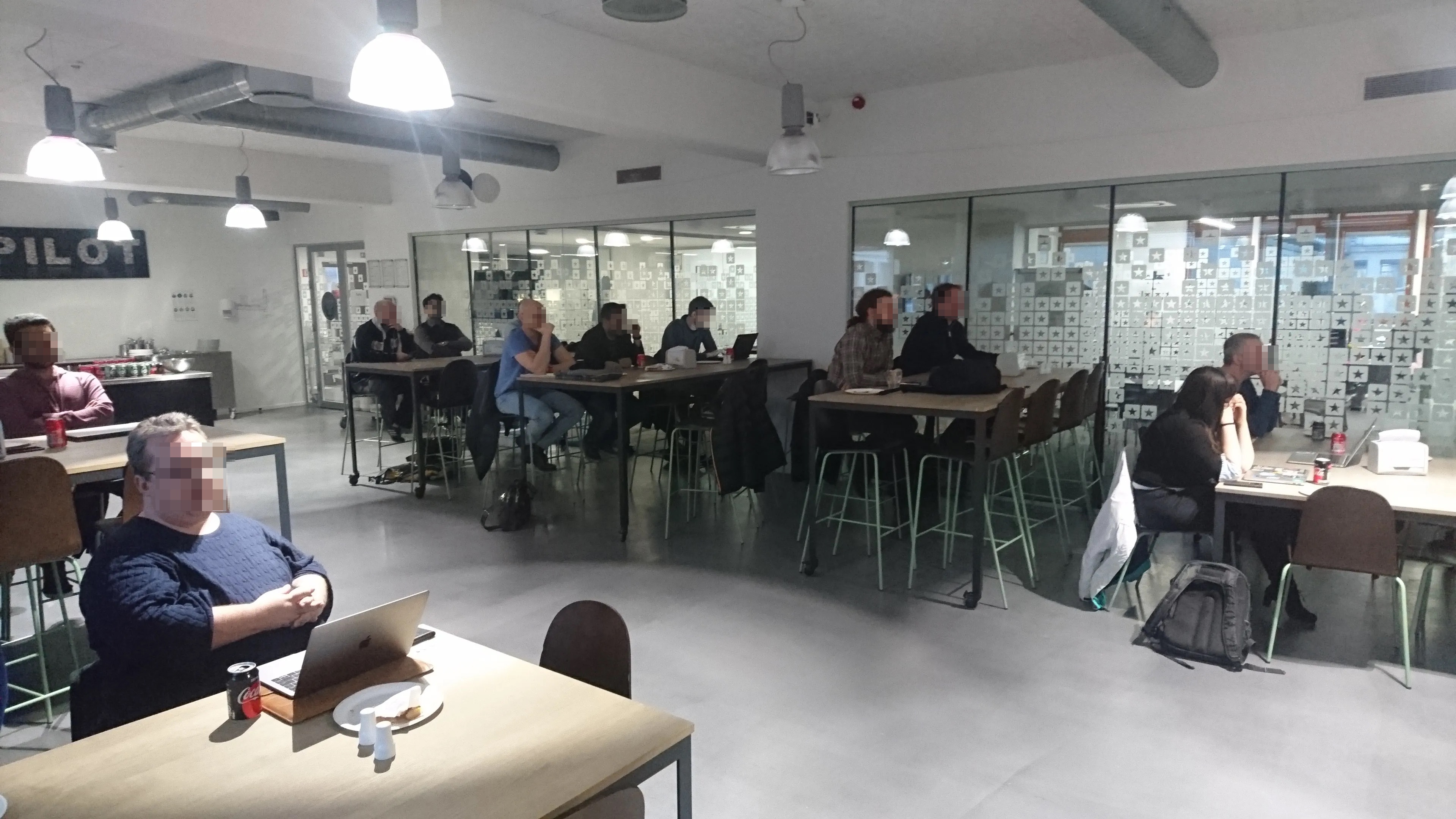
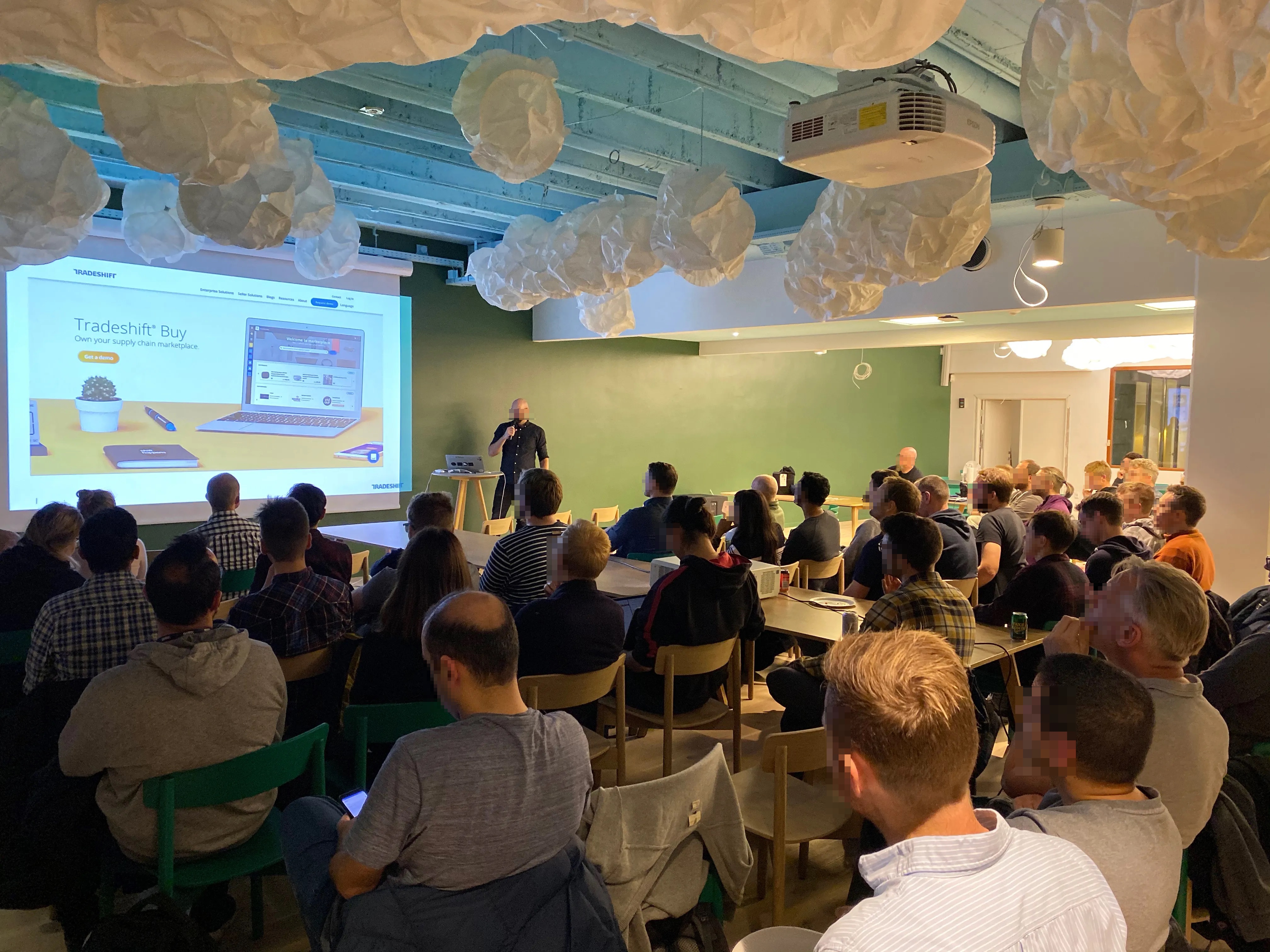
What about technical meetups in Denmark?

Creative Coding Copenhagen meetup:

Source

AWS User Group meetup in Copenhagen:

Source

AWS User Group meetup in Copenhagen:

Source

As you can see, even in technical meetups in Copenhagen, Denmark, you can usually meet less than 4-5 women, compared to the almost always equal number of men and women in IT teams in Iran.

OK, but what if this is true only for one specific company in Iran?

Then I searched for a few other companies in Iran, and this was the result:

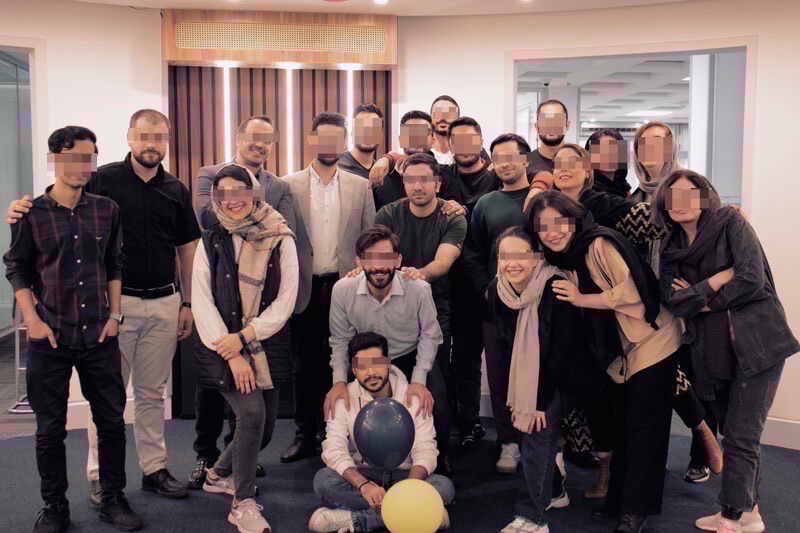
A technical team at Digikala (an e-commerce company in Iran):

7 female | 13 male | Source

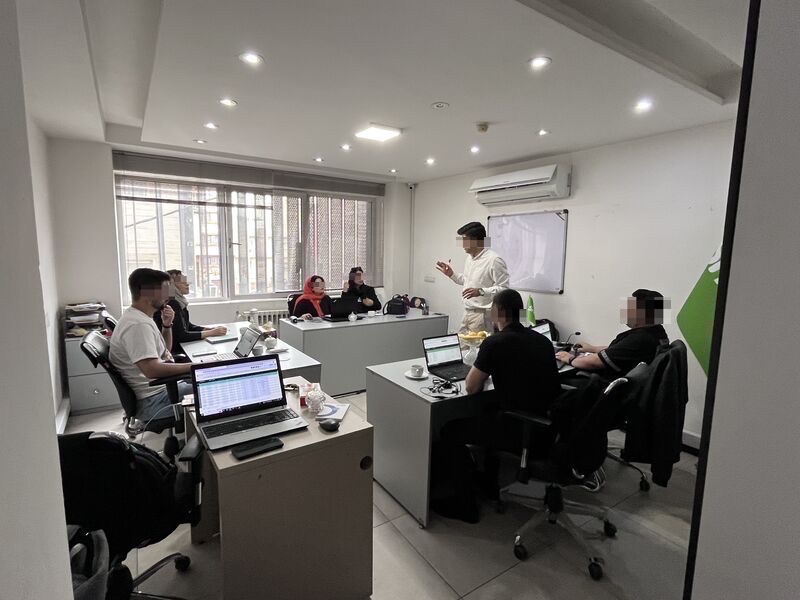
A technical team at Snapp! (a ride hailing company in Iran, similar to Uber):

3 female | 4 male | Source

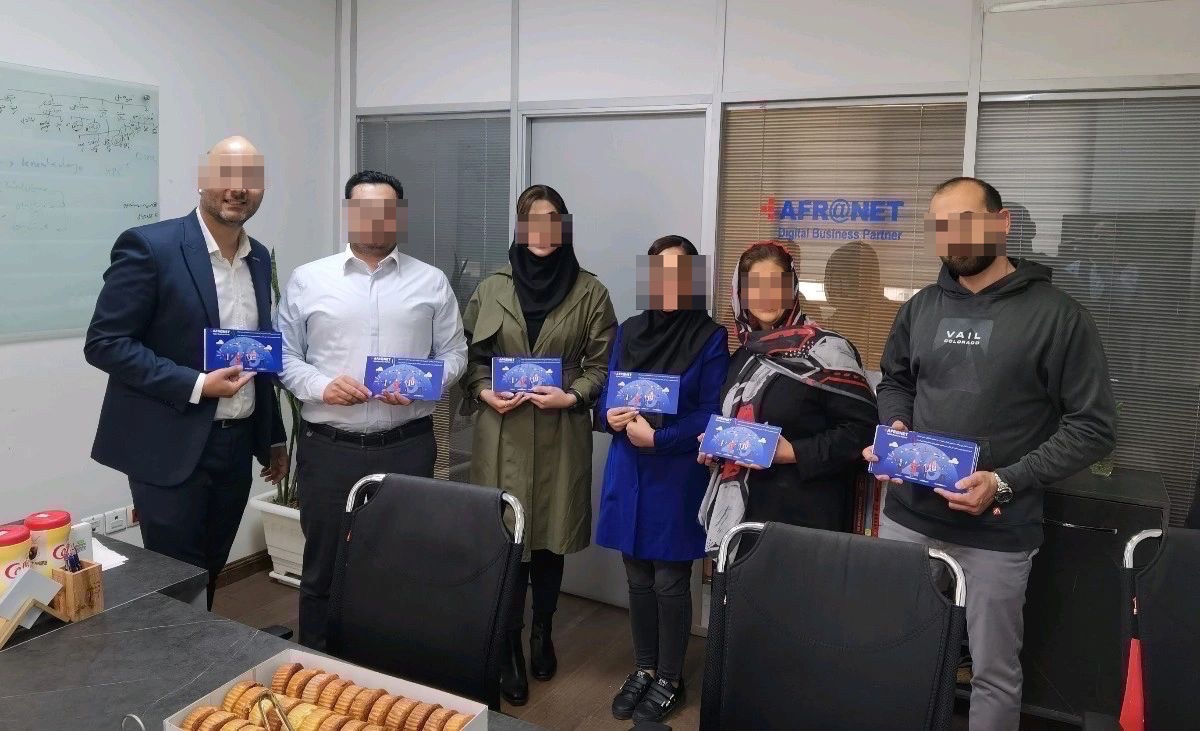
A technical team at Afranet (an ISP company in Iran):

3 female | 3 male | Source

OK, but how can I validate what you say?

Even though considering the fact that not everyone in Iran uses LinkedIn, and not everyone is good at English, you can search on LinkedIn and see how many women work in different industries in Iran as leaders, managers, engineers, doctors, etc.

For example, you can check the number of women who work in these two large companies in Iran:

1️⃣

MTN-Irancell's employee (a telecom company in Iran)

2️⃣

Snapp!'s employee (a ride hailing company in Iran, similar to Uber)

In fact, back then, when I was working for Gemalto (as an external employee for the regional branch in the UAE) and with MTN-Irancell (as our client), three of the client managers (out of 6) that I used to work with directly were female. One of these managers (female) not only had a master's degree in IT but also was from a minority group who followed the Zarathustra religion (some people lie and say only Muslims can get jobs in Iran - which is not true).

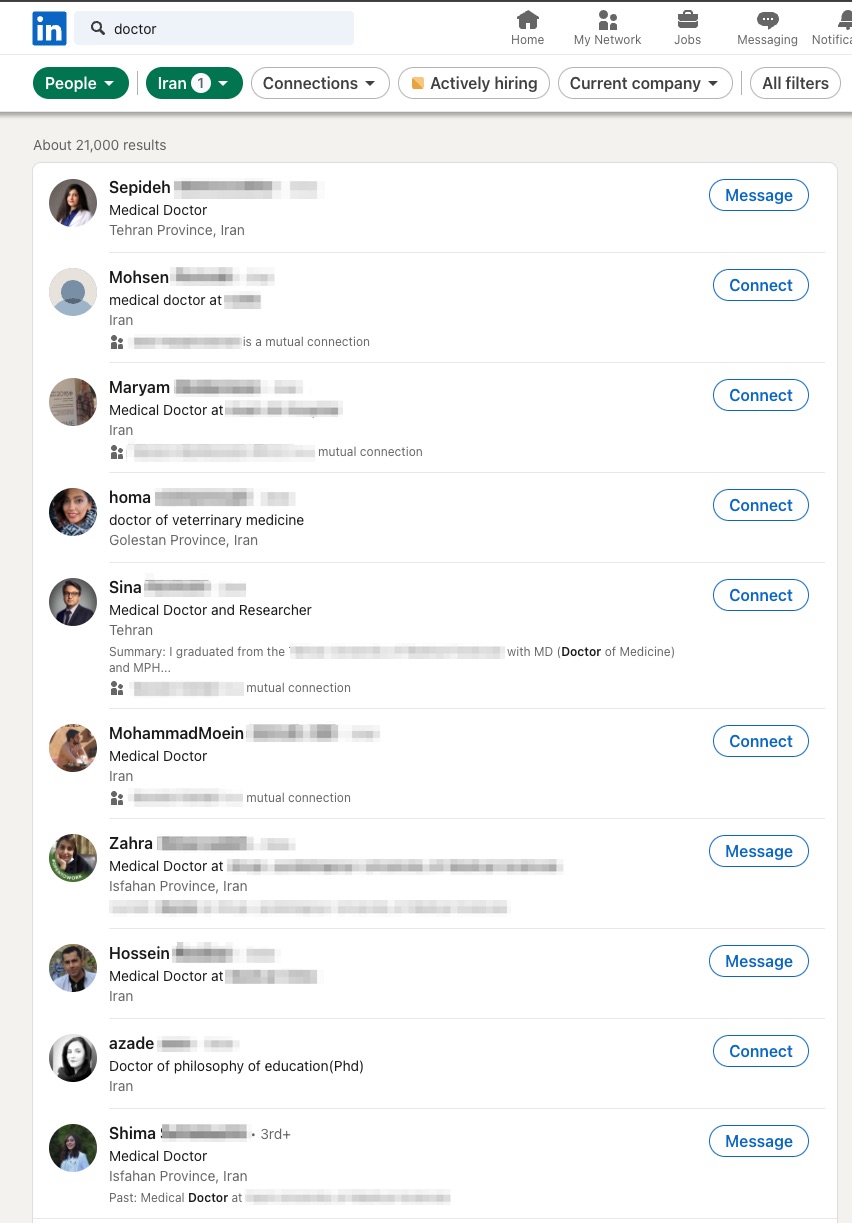
Also, you can search LinkedIn for each type of job and see how many results are female compared to men. For example, I just searched for the term "Doctor" for people who reside in Iran, and this was the result:

As you can see, 6 out of 10 of these doctors are women, and this is just one sample page out of the list of the 21,000 Iranian doctors who use LinkedIn and reside in Iran. (OK, one is a Ph.D. and one is a doctor of veterinary medicine - not a medical doctor, but still, you get the idea)

Now, let's search for Developers in Tehran, Iran:

As you can see, based on the search results for Tehran (a city in Iran - considering the factor of population), 5 out of 10 of these developers are women.

Now, let's compare it with Developers in Denmark:

As you can see, based on the search results for Denmark, all the developers are men!

Then I said, ok, let's search by the term "programmer" to see what the result would be for Denmark:

As you can see, based on the search results for Denmark, all the programmers are also men!

Out of curiosity, I continued looking at the following few pages, and interestingly, I could find the first female "programmer" on the 3rd page of the search result!

I continued to page 10 (looked at 10x10=100 people in the results), and only 4 out of the 100 were female! Based on the name and work background, I could tell that 3 of these 4 female programmers in Denmark were not Danish either. (2 had emigrated from Iran and 1 from India)

You might say, ok, about Iran, what if this is true only for Tehran? Then, I changed the location from a specific city to a country and searched for Developers in Iran:

As you can see, based on the search result for Iran (which might sound more accurate to compare with Denmark since it is country vs country), 6 out of 10 of these developers are women.

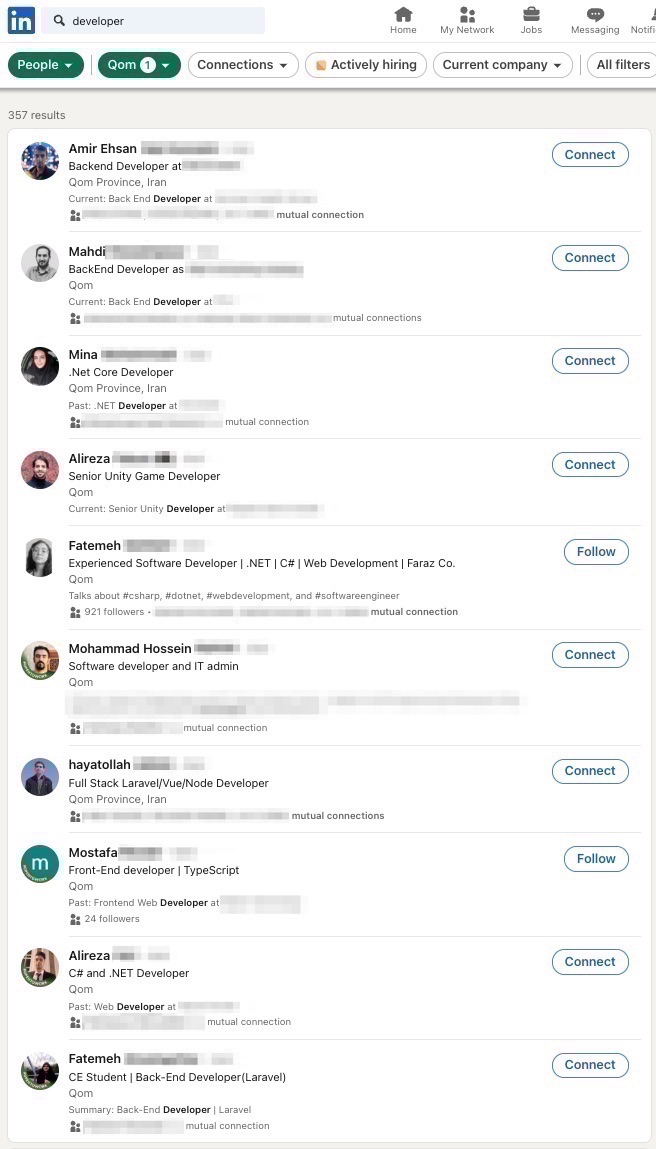
Then, out of curiosity, I changed the location to one of the most conservative Islamic provinces in Iran, Qom, where women are known to have less freedom compared to the rest of the country:

where women are known to have less freedom compared to the rest of the country:

As you can see, based on the search result for Qom (one of the most conservative Islamic provinces in Iran), still... 3 out of 10 of these developers are women!

People who spread misinformation

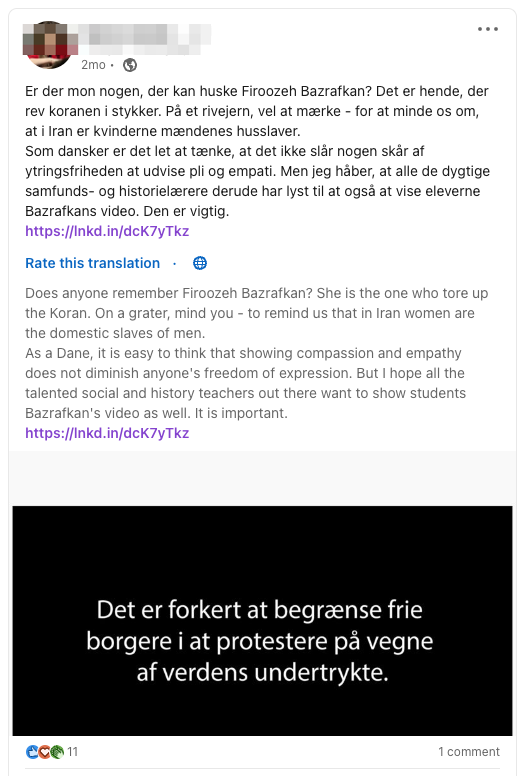
Two months ago, I came across a public post on LinkedIn (searchable through Google) in which a Dane had proudly accused and discriminated against Iranian men (and indirectly all the smart Iranian women) by writing in a public post on LinkedIn that "in Iran, women are men's house slaves." (at i Iran er kvinderne mændenes husslaver.)

Note: The author's identity (name and photo) is blured because this article is not about a specific person,

and this screenshot acts only as just an example. Also, I respect people's privacy, no matter what.

A common anti-specific-religion (whatever is not ours: today is against Islam, before it was against Judaism, etc.) anti-immigrant mindset that tends to (or thinks it is cool to do so) present Iranian men as "evil" and Iranian women as dumb "house slaves" who don't leave home, don't study, and don't work! (similar to what media tend to spread about the "Middle East as one package")

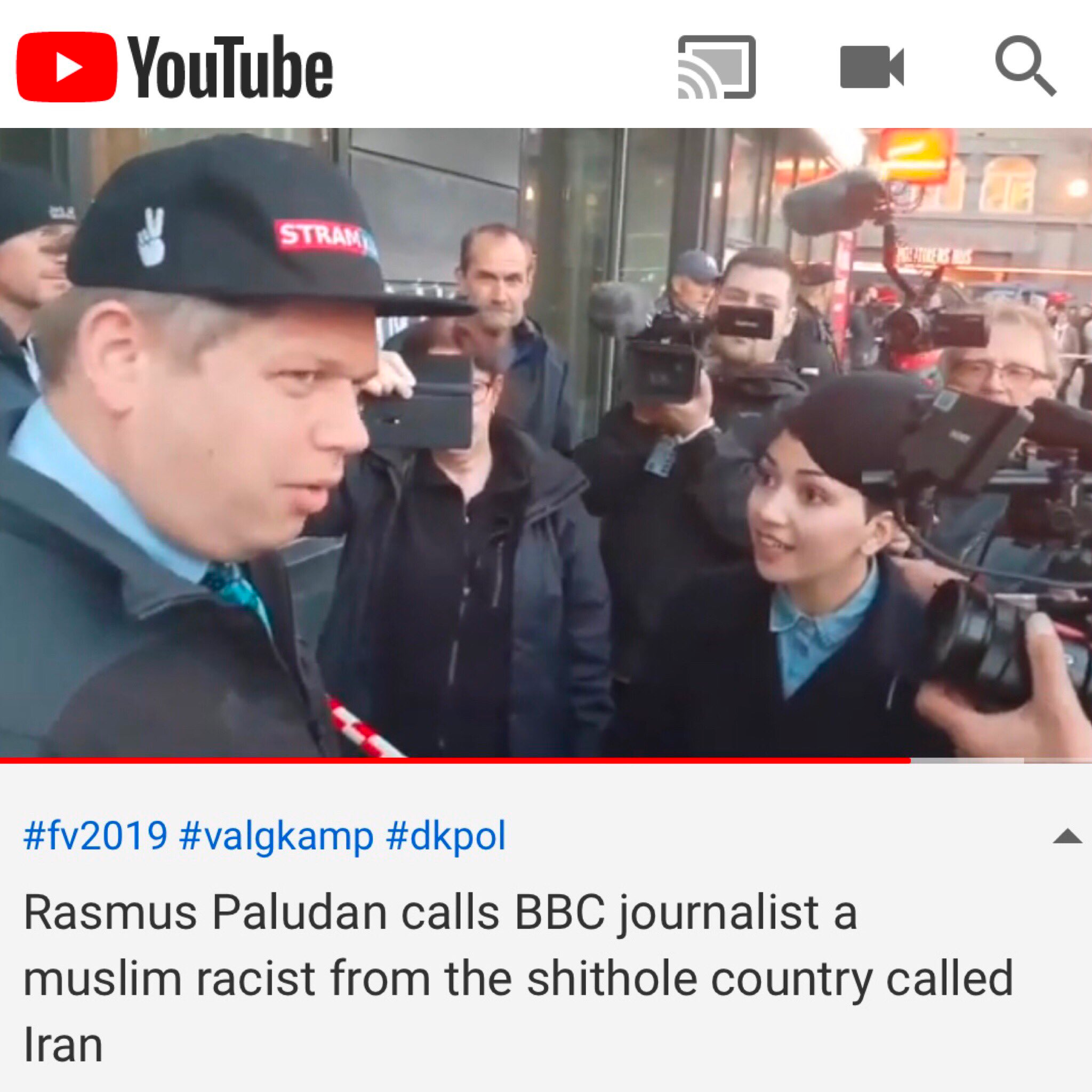
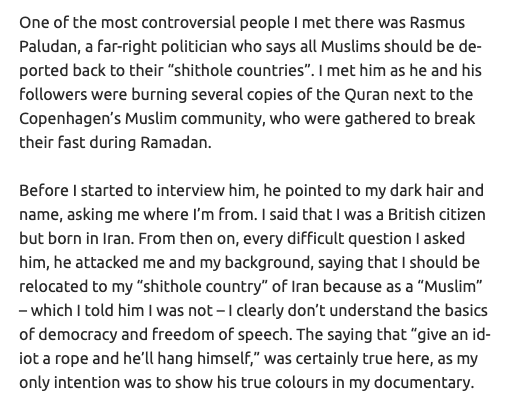
Unfortunately, recently this kind of far-right thought has become quite popular in Denmark. For example, a few years ago, a far-right anti-immigrant Danish politician, Rasmus Paludan, looked at Sahar Zand's face, an Iranian female journalist who works for BBC, and told her:

" I sense you're a Muslim in your soul... They should send you back to your "sh*thole" country, Iran! "

Source

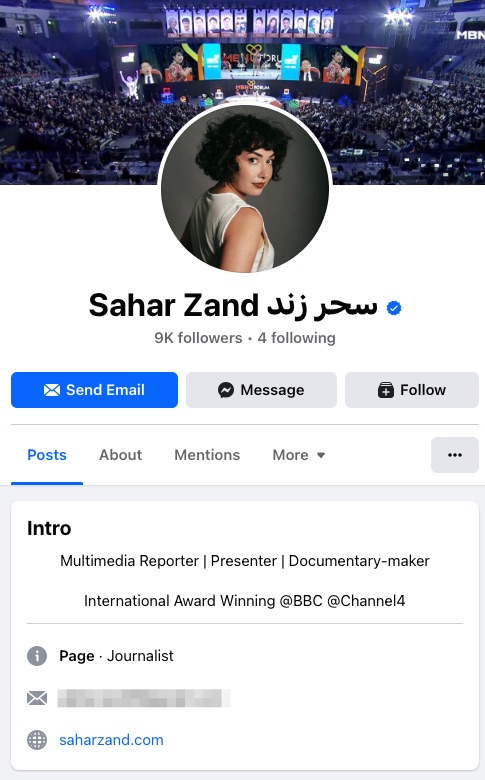
A far-right anti-immigrant mindset that presents a successful woman like this as a "house slave",

her country as a "sh*thole", and thinks she should be sent back to her country:

Source

You can read more about Sahar Zand and her experience interviewing Rasmus Paludan

here.

Source

If you ever come up with similar thoughts, remember:

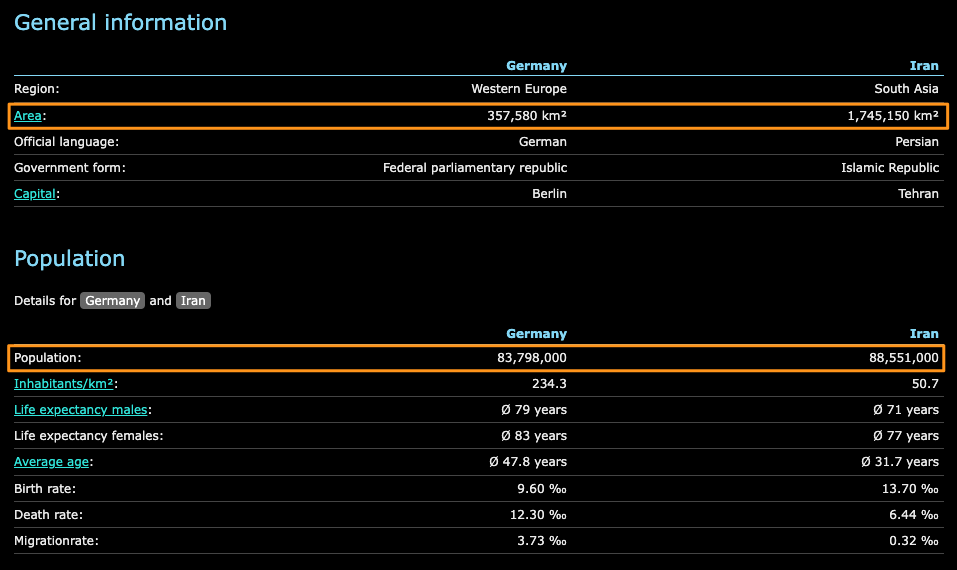
1. Size-wise (not population), Iran is ~5x larger than Germany (image below) and about 38x larger than Denmark, with a very diverse culture, so yes, of course, these things might still happen in some small villages among some uncommon cultures, similar to what happens even in Europe among specific groups. If you have one culture in Denmark, that doesn't mean everyone in Europe has the same culture. People in Germany, Italy, Bulgaria, Romania, Estonia, etc. should be different from you and each other, right? Considering the matter of size and diversity, this should be how you compare different provinces of Iran to different countries of Europe. If this is just Iran, now think how diverse the Middle East is! ... and how diverse the continent of Asia is! (which is the largest continent on this planet - from Russia, China, India, Iran, Turkey, etc. to Japan, Korea,...)

Source

2. It is well known among Iranians that people who have failed entering university (even though you can study for free if you pass an exam), have a criminal background (raped, killed someone, stole money, committed fraudulent activities, etc.), or are just lazy ones who don't like to work, usually "immigrate" by seeking asylum based on lies (not all of course), so yes these people tend to spread misinformation about their home country to please the officers and get their asylum approved.

The 2nd-generation of these immigrants who are born in Europe also have no idea about their home country and just repeat what far-right activists say in order to please those who hate immigrants and find a way to be included in society.

This also happens to people who have been rejected by the new society for a long time and are desperately looking for a way to be included, so they start repeating what seems to be "wanted to be heard by those who have rejected them".

3. Yes, unfortunately, politicians in most Western countries mainly welcome this kind of lazy, corrupt immigrants, (remember, again, not all immigrants are lazy or corrupt) so then they can use them as an example to support their lies about the Middle East and fool people into voting for them based on hatred.

Especially the far-right populists who say they are against the "lazy refugees" (I disagree to generalize) and have gained power mainly by spreading hatred towards anyone coming from the Middle East. Meanwhile, what they have done so far has been making it 10x harder for highly-educated expats like me coming from the same region.

4. There is a difference between sympathy and trash-talking. It is not okay to spread misinformation about people living in other countries or any kind of minorities in your society under the name of "sympathy", just because you might be under the influence of some far-right politicians who benefit from repeating the same kind of lies again and again.

Conclusion

It is interesting to see that compared to Denmark, in Iran, for years, we have a much much much higher percentage of women in IT and engineering jobs, even if you compare the percentage from 10-20 years ago in Iran to the percentage in Denmark today!

I am happy to see that in the past few years, several NGOs, meetup groups, etc., have been created to encourage women in Denmark to enter IT. (Interestingly, the most active organizers I have seen in this area were Iranians or Polish) For example: Women in Tech, Hack Your Future, Women Techmakers Copenhagen, etc. but interestingly still after a few years there is almost NO Danish woman doing hands-on engineering stuff in this industry.

Last but not least, if you think it is cool to trash talk and spread hatred-based misinformation about others, remember that:

Yes, in a diverse country like Iran, we have many problems. We have an unpopular theocratic Islamic monarchy, and yes, we have stupid legislation and laws like compulsory hijab for women (most people are against it - but, yes, it has a minority of radical supporters too), or conscription (compulsory military service) which says all men above 18 have to serve in the military, etc. Still, your country also has many problems and stupid laws, and you are neither perfect. You have a monarchy too in Denmark. You like yours, but we don't like ours! And, in fact, most Iranians, like me, not only dislike but also are against any lifetime one-man-run system, whether it is a "monarchy leadership," a "theocratic leadership," or a "communist leadership."

Let's try to be less influenced by the media's brainwashing and instead spread love and peace. ❤️🕊️🍻

If you liked the article, feel free to share it with your friends, family, or colleagues. You can also follow me on Medium or LinkedIn.

Copyright & Disclaimer

  • All content provided on this article is for informational and educational purposes only. The author makes no representations as to the accuracy or completeness of any information on this site or found by following any link on this site.
  • All the content is copyrighted, except the assets and content I have referenced to other people's work, and may not be reproduced on other websites, blogs, or social media. You are not allowed to reproduce, summarize to create derivative work, or use any content from this website under your name. This includes creating a similar article or summary based on AI/GenAI. For educational purposes, you may refer to parts of the content, and only refer, but you must provide a link back to the original article on this website. This is allowed only if your content is less than 10% similar to the original article.
  • While every care has been taken to ensure the accuracy of the content of this website, I make no representation as to the accuracy, correctness, or fitness for any purpose of the site content, nor do I accept any liability for loss or damage (including consequential loss or damage), however, caused, which may be incurred by any person or organization from reliance on or use of information on this site.
  • The contents of this article should not be construed as legal advice.
  • Opinions are my own and not the views of my employer.
  • English is not my mother-tongue language, so even though I try my best to express myself correctly, there might be a chance of miscommunication.
  • Links or references to other websites, including the use of information from 3rd-parties, are provided for the benefit of people who use this website. I am not responsible for the accuracy of the content on the websites that I have put a link to and I do not endorse any of those organizations or their contents.
  • If you have any queries or if you believe any information on this article is inaccurate, or if you think any of the assets used in this article are in violation of copyright, please contact me and let me know.

Gender diversity at work: Denmark🇩🇰 vs Iran🇮🇷

Gender diversity at work: Denmark🇩🇰 vs Iran🇮🇷
Published: June 27, 2023

As a software developer and a person who is experienced with IT infrastructure, back then, when I was residing in Iran, I was happy to work in our IT teams where almost half of the technical staff and managers were women (example photos below). This could reduce the stress and tension in our teams and make the work environment more enjoyable.

Below is a typical Iranian IT team (I just searched public posts on LinkedIn and this was the first result):
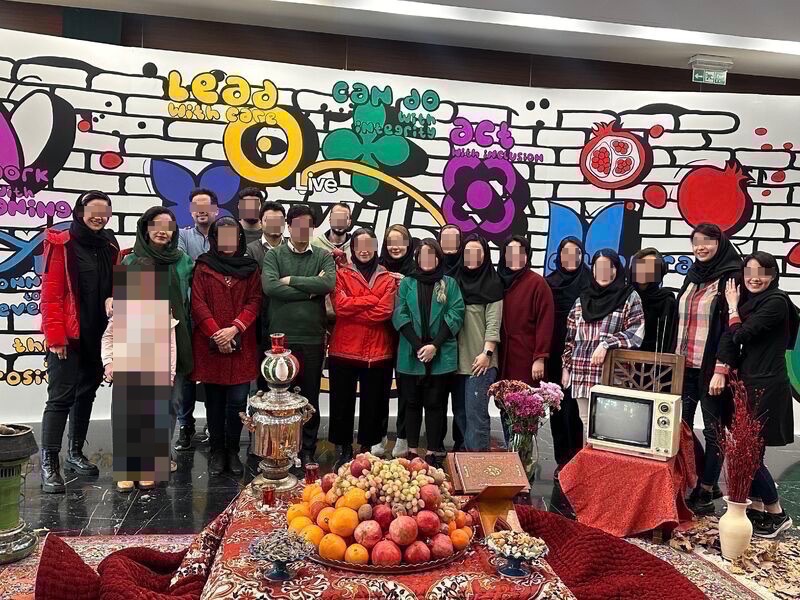
17 female | 26 male | Source

10 female | 10 male | Source

14 female | 5 male | Source

Note: Even though all the photos are gathered from public posts on LinkedIn, I have blurred people's eyes/faces to respect people's privacy. This article is not about specific people or companies but is a generic comparison between the two countries regarding gender diversity at work. This article is written for educational purposes, so to avoid personal bias, I randomly selected some of these images from a fresh search result, and the rest are gathered from different sources to support facts.

Warning: You might not like this article if you don't like Iran, Iranian women, or Iranian men, or if you support far-right extremist politicians who have gained power by spreading misinformation and hatred. So continue only if you are open-minded and can tolerate facing the truth.

OK, let's continue...

When I moved to Denmark, I thought, ok! If I am moving from a 3rd-world "developing" country to a "developed" one in Europe, which is named the "happiest country in the world!", then I should expect to see more diversity at work, right?

But surprisingly, since then, I have seen almost NO Danish women in this industry (except one)! (hands-on software developer, data scientist, data engineer, DevOps/DevSecOps engineer, etc.

  • not a manager, business founder, designer, UX which is business-related, Business Analyst, etc.) So, whenever I am added to a Danish IT team, it feels like I'm joining a boys club! And bear in mind that I have worked for many companies here, either as an employee or a consultant working for different companies through consultancy firms. So far, I have seen an acceptable number of Danish women working as designers, managers, project managers, and business analysts, but the only few women I have seen working in Danish companies doing IT engineering stuff were mainly (most, not if all) from Iran, India, etc. (Asia), or Poland, Ukraine, etc. (Eastern European countries). Finally, about a year and a half ago, I met a smart Danish woman working as a developer for one of my clients. 💪 Alongside her, there were also a smart Iranian female Data Scientists 💪 but the rest were all men. 👨

Below is a typical Danish IT team (I just searched public posts on LinkedIn and this was the first result):
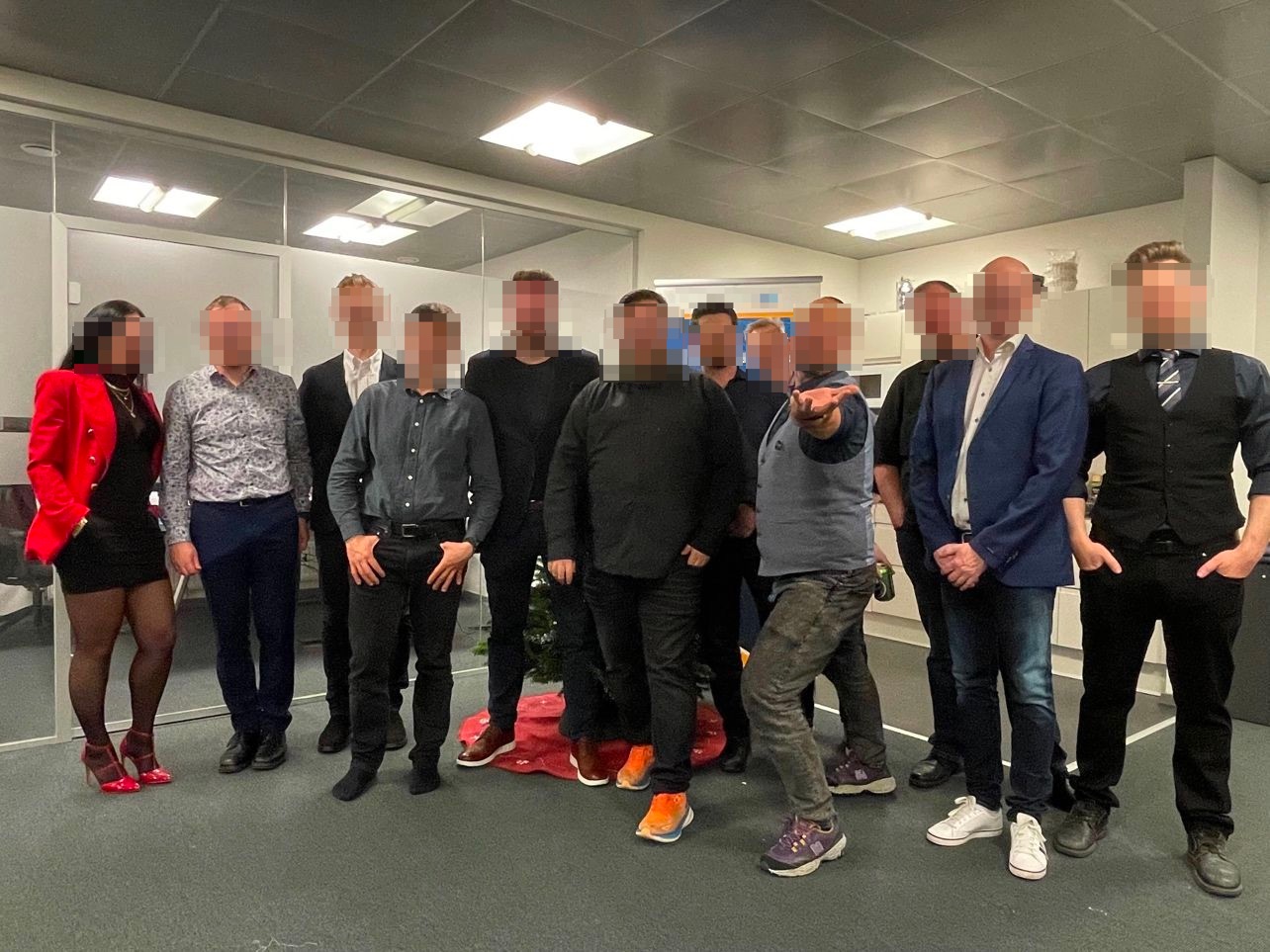
1 female | 11 male | Source

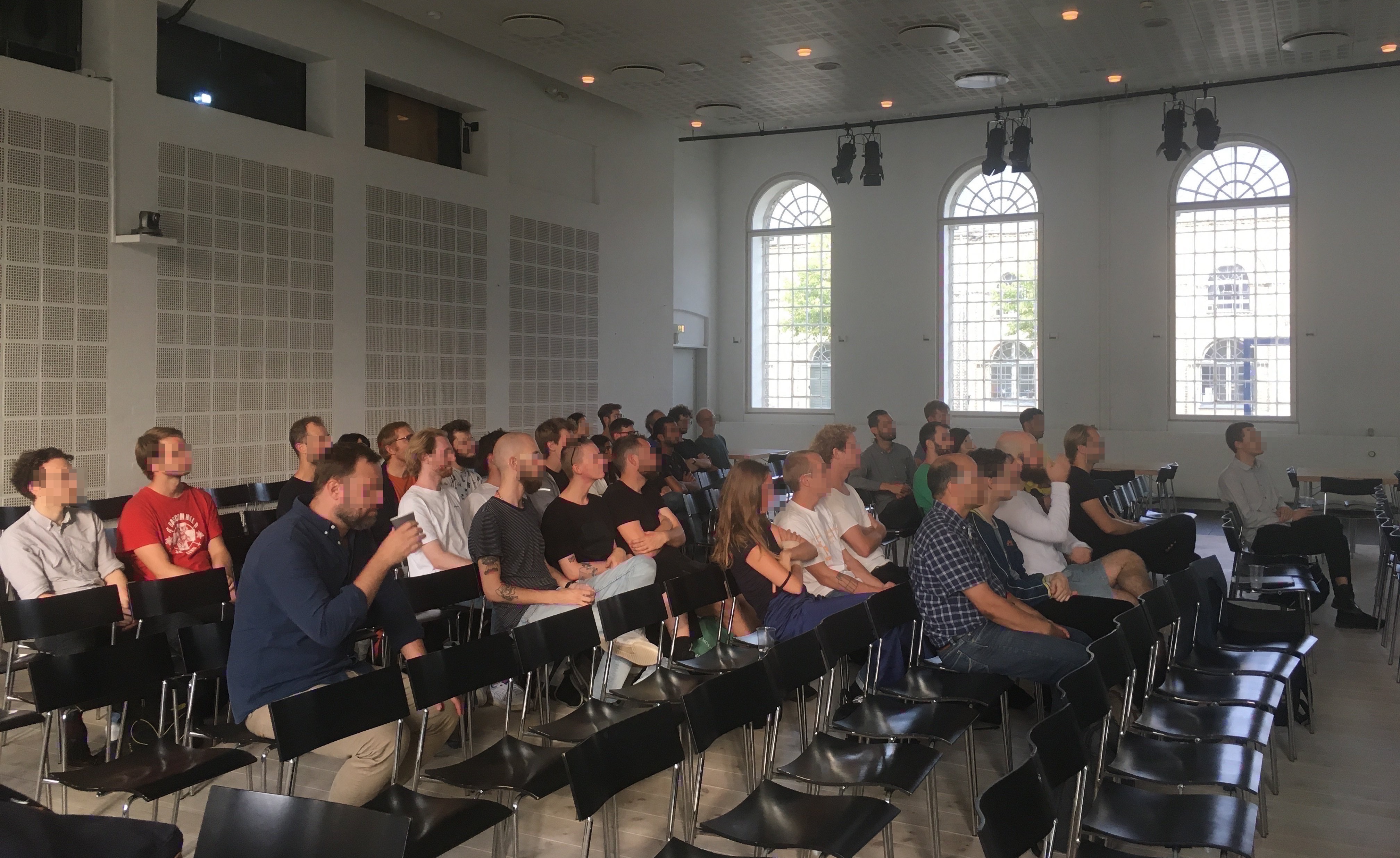
What about technical meetups in Denmark?

Creative Coding Copenhagen meetup:
Source

AWS User Group meetup in Copenhagen:

Source

AWS User Group meetup in Copenhagen:

Source

As you can see, even in technical meetups in Copenhagen, Denmark, you can usually meet less than 4-5 women, compared to the almost always equal number of men and women in IT teams in Iran.

OK, but what if this is true only for one specific company in Iran?

Then I searched for a few other companies in Iran, and this was the result:

A technical team at Digikala (an e-commerce company in Iran):
7 female | 13 male | Source

A technical team at Snapp! (a ride hailing company in Iran, similar to Uber):
3 female | 4 male | Source

A technical team at Afranet (an ISP company in Iran):
3 female | 3 male | Source

OK, but how can I validate what you say?

Even though considering the fact that not everyone in Iran uses LinkedIn, and not everyone is good at English, you can search on LinkedIn and see how many women work in different industries in Iran as leaders, managers, engineers, doctors, etc.

For example, you can check the number of women who work in these two large companies in Iran:

1️⃣

MTN-Irancell's employee (a telecom company in Iran)

2️⃣

Snapp!'s employee (a ride hailing company in Iran, similar to Uber)

In fact, back then, when I was working for Gemalto (as an external employee for the regional branch in the UAE) and with MTN-Irancell (as our client), three of the client managers (out of 6) that I used to work with directly were female. One of these managers (female) not only had a master's degree in IT but also was from a minority group who followed the Zarathustra religion (some people lie and say only Muslims can get jobs in Iran - which is not true).

Also, you can search LinkedIn for each type of job and see how many results are female compared to men. For example, I just searched for the term "Doctor" for people who reside in Iran, and this was the result:
As you can see, 6 out of 10 of these doctors are women, and this is just one sample page out of the list of the 21,000 Iranian doctors who use LinkedIn and reside in Iran. (OK, one is a Ph.D. and one is a doctor of veterinary medicine - not a medical doctor, but still, you get the idea)

Now, let's search for Developers in Tehran, Iran:
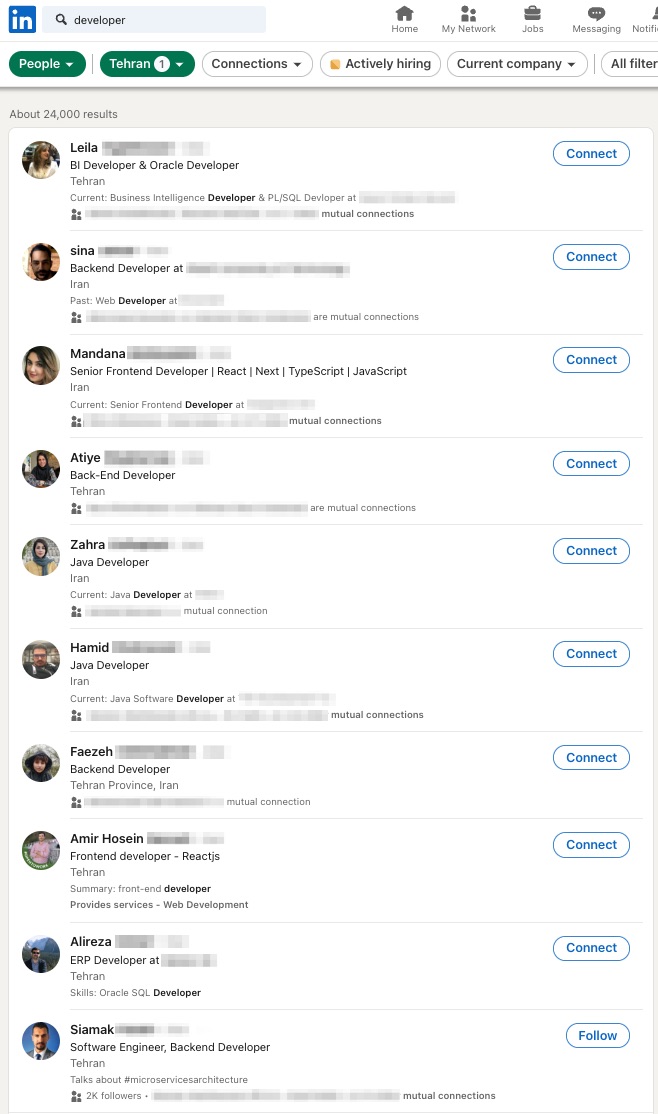
As you can see, based on the search results for Tehran (a city in Iran - considering the factor of population), 5 out of 10 of these developers are women.

Now, let's compare it with Developers in Denmark:
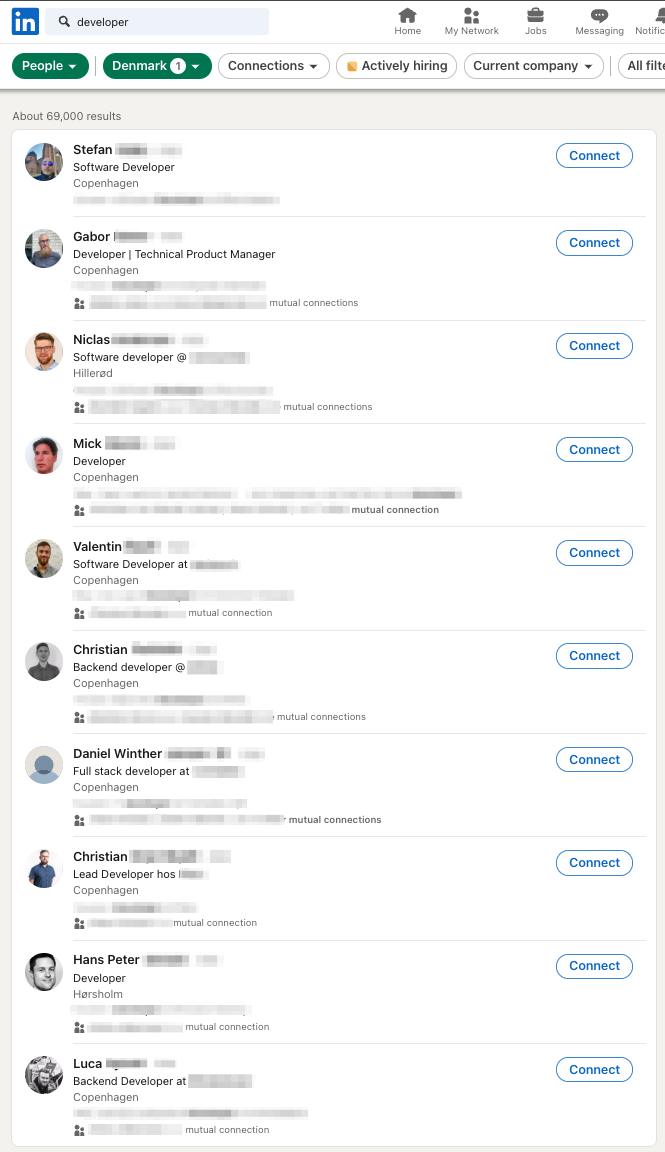
As you can see, based on the search results for Denmark, all the developers are men!

Then I said, ok, let's search by the term "programmer" to see what the result would be for Denmark:
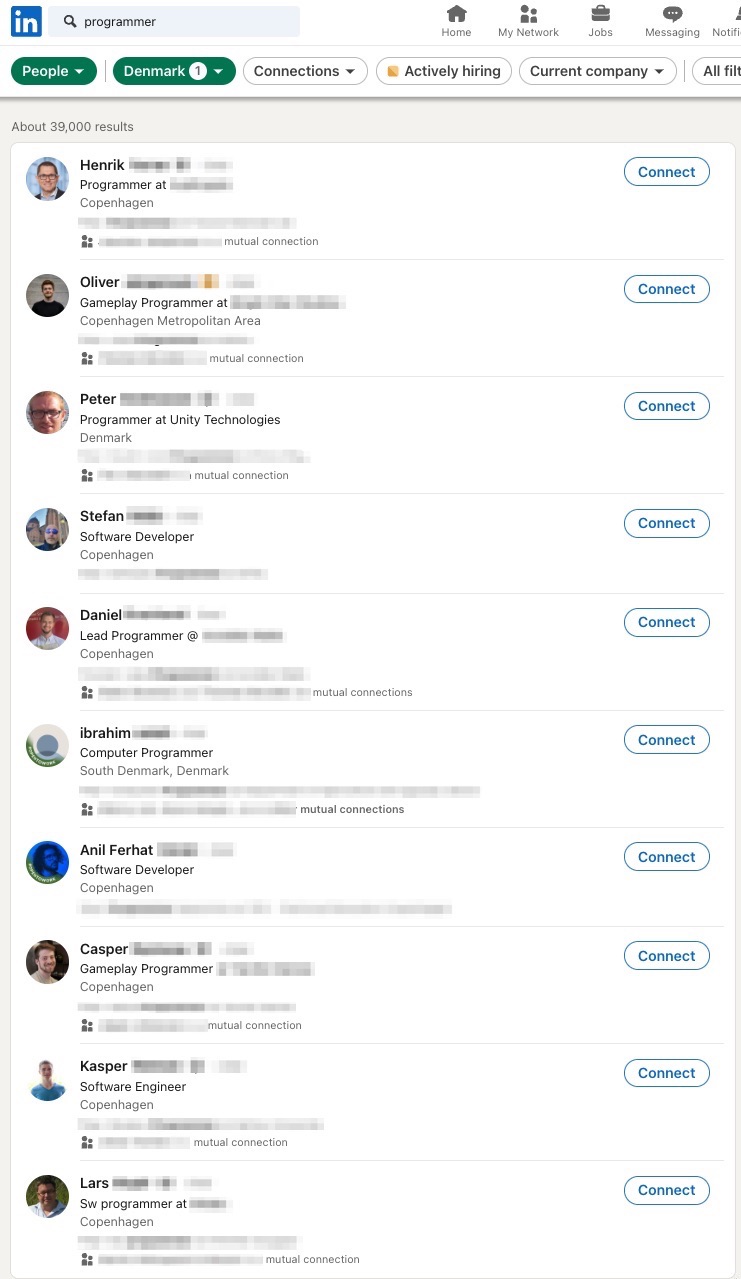
As you can see, based on the search results for Denmark, all the programmers are also men!

Out of curiosity, I continued looking at the following few pages, and interestingly, I could find the first female "programmer" on the 3rd page of the search result!

I continued to page 10 (looked at 10x10=100 people in the results), and only 4 out of the 100 were female! Based on the name and work background, I could tell that 3 of these 4 female programmers in Denmark were not Danish either. (2 had emigrated from Iran and 1 from India)

You might say, ok, about Iran, what if this is true only for Tehran? Then, I changed the location from a specific city to a country and searched for Developers in Iran:
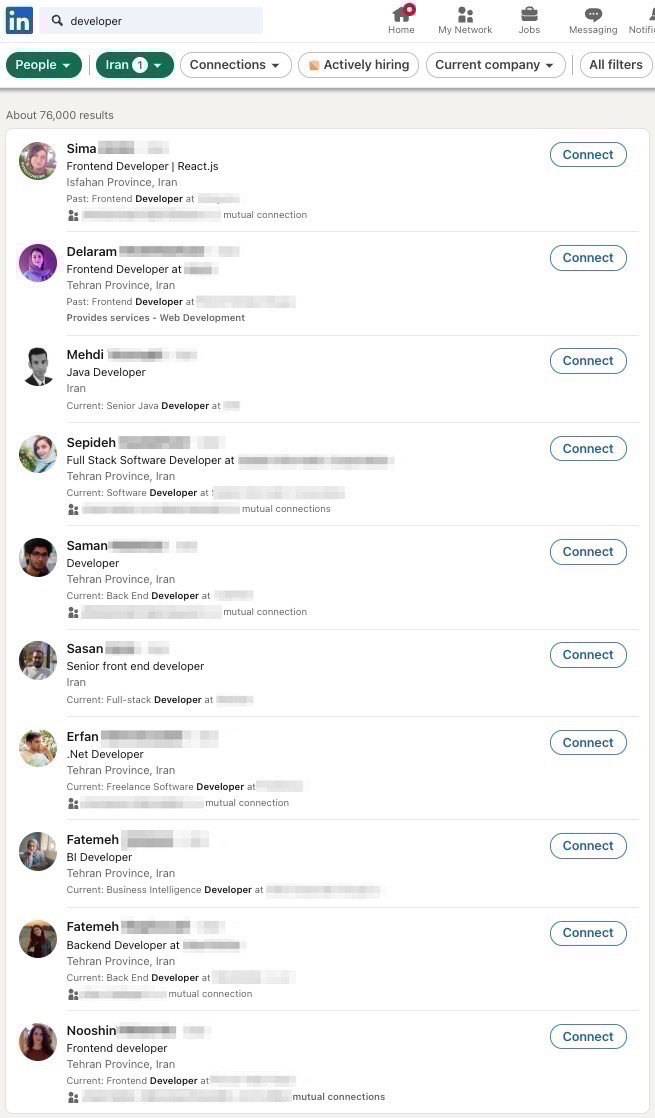
As you can see, based on the search result for Iran (which might sound more accurate to compare with Denmark since it is country vs country), 6 out of 10 of these developers are women.

Then, out of curiosity, I changed the location to one of the most conservative Islamic provinces in Iran, Qom, where women are known to have less freedom compared to the rest of the country:
where women are known to have less freedom compared to the rest of the country:

As you can see, based on the search result for Qom (one of the most conservative Islamic provinces in Iran), still... 3 out of 10 of these developers are women!

People who spread misinformation

Two months ago, I came across a public post on LinkedIn (searchable through Google) in which a Dane had proudly accused and discriminated against Iranian men (and indirectly all the smart Iranian women) by writing in a public post on LinkedIn that "in Iran, women are men's house slaves." (at i Iran er kvinderne mændenes husslaver.)

Note: The author's identity (name and photo) is blured because this article is not about a specific person,
and this screenshot acts only as just an example. Also, I respect people's privacy, no matter what.

A common anti-specific-religion (whatever is not ours: today is against Islam, before it was against Judaism, etc.) anti-immigrant mindset that tends to (or thinks it is cool to do so) present Iranian men as "evil" and Iranian women as dumb "house slaves" who don't leave home, don't study, and don't work! (similar to what media tend to spread about the "Middle East as one package")

Unfortunately, recently this kind of far-right thought has become quite popular in Denmark. For example, a few years ago, a far-right anti-immigrant Danish politician, Rasmus Paludan, looked at Sahar Zand's face, an Iranian female journalist who works for BBC, and told her:

" I sense you're a Muslim in your soul... They should send you back to your "sh*thole" country, Iran! "
Source

A far-right anti-immigrant mindset that presents a successful woman like this as a "house slave",
her country as a "sh*thole", and thinks she should be sent back to her country:

Source

You can read more about Sahar Zand and her experience interviewing Rasmus Paludan
here.

Source

If you ever come up with similar thoughts, remember:

1. Size-wise (not population), Iran is ~5x larger than Germany (image below) and about 38x larger than Denmark, with a very diverse culture, so yes, of course, these things might still happen in some small villages among some uncommon cultures, similar to what happens even in Europe among specific groups. If you have one culture in Denmark, that doesn't mean everyone in Europe has the same culture. People in Germany, Italy, Bulgaria, Romania, Estonia, etc. should be different from you and each other, right? Considering the matter of size and diversity, this should be how you compare different provinces of Iran to different countries of Europe. If this is just Iran, now think how diverse the Middle East is! ... and how diverse the continent of Asia is! (which is the largest continent on this planet - from Russia, China, India, Iran, Turkey, etc. to Japan, Korea,...)
Source

2. It is well known among Iranians that people who have failed entering university (even though you can study for free if you pass an exam), have a criminal background (raped, killed someone, stole money, committed fraudulent activities, etc.), or are just lazy ones who don't like to work, usually "immigrate" by seeking asylum based on lies (not all of course), so yes these people tend to spread misinformation about their home country to please the officers and get their asylum approved.

The 2nd-generation of these immigrants who are born in Europe also have no idea about their home country and just repeat what far-right activists say in order to please those who hate immigrants and find a way to be included in society.

This also happens to people who have been rejected by the new society for a long time and are desperately looking for a way to be included, so they start repeating what seems to be "wanted to be heard by those who have rejected them".

3. Yes, unfortunately, politicians in most Western countries mainly welcome this kind of lazy, corrupt immigrants, (remember, again, not all immigrants are lazy or corrupt) so then they can use them as an example to support their lies about the Middle East and fool people into voting for them based on hatred.

Especially the far-right populists who say they are against the "lazy refugees" (I disagree to generalize) and have gained power mainly by spreading hatred towards anyone coming from the Middle East. Meanwhile, what they have done so far has been making it 10x harder for highly-educated expats like me coming from the same region.

4. There is a difference between sympathy and trash-talking. It is not okay to spread misinformation about people living in other countries or any kind of minorities in your society under the name of "sympathy", just because you might be under the influence of some far-right politicians who benefit from repeating the same kind of lies again and again.

Conclusion

It is interesting to see that compared to Denmark, in Iran, for years, we have a much much much higher percentage of women in IT and engineering jobs, even if you compare the percentage from 10-20 years ago in Iran to the percentage in Denmark today!

I am happy to see that in the past few years, several NGOs, meetup groups, etc., have been created to encourage women in Denmark to enter IT. (Interestingly, the most active organizers I have seen in this area were Iranians or Polish) For example: Women in Tech, Hack Your Future, Women Techmakers Copenhagen, etc. but interestingly still after a few years there is almost NO Danish woman doing hands-on engineering stuff in this industry.

Last but not least, if you think it is cool to trash talk and spread hatred-based misinformation about others, remember that:

Yes, in a diverse country like Iran, we have many problems. We have an unpopular theocratic Islamic monarchy, and yes, we have stupid legislation and laws like compulsory hijab for women (most people are against it - but, yes, it has a minority of radical supporters too), or conscription (compulsory military service) which says all men above 18 have to serve in the military, etc. Still, your country also has many problems and stupid laws, and you are neither perfect. You have a monarchy too in Denmark. You like yours, but we don't like ours! And, in fact, most Iranians, like me, not only dislike but also are against any lifetime one-man-run system, whether it is a "monarchy leadership," a "theocratic leadership," or a "communist leadership."

Let's try to be less influenced by the media's brainwashing and instead spread love and peace. ❤️🕊️🍻

If you liked the article, feel free to share it with your friends, family, or colleagues. You can also follow me on Medium or LinkedIn.

Copyright & Disclaimer

  • All content provided on this article is for informational and educational purposes only. The author makes no representations as to the accuracy or completeness of any information on this site or found by following any link on this site.
  • All the content is copyrighted, except the assets and content I have referenced to other people's work, and may not be reproduced on other websites, blogs, or social media. You are not allowed to reproduce, summarize to create derivative work, or use any content from this website under your name. This includes creating a similar article or summary based on AI/GenAI. For educational purposes, you may refer to parts of the content, and only refer, but you must provide a link back to the original article on this website. This is allowed only if your content is less than 10% similar to the original article.
  • While every care has been taken to ensure the accuracy of the content of this website, I make no representation as to the accuracy, correctness, or fitness for any purpose of the site content, nor do I accept any liability for loss or damage (including consequential loss or damage), however, caused, which may be incurred by any person or organization from reliance on or use of information on this site.
  • The contents of this article should not be construed as legal advice.
  • Opinions are my own and not the views of my employer.
  • English is not my mother-tongue language, so even though I try my best to express myself correctly, there might be a chance of miscommunication.
  • Links or references to other websites, including the use of information from 3rd-parties, are provided for the benefit of people who use this website. I am not responsible for the accuracy of the content on the websites that I have put a link to and I do not endorse any of those organizations or their contents.
  • If you have any queries or if you believe any information on this article is inaccurate, or if you think any of the assets used in this article are in violation of copyright, please contact me and let me know.
Copyright © 2025 - pooyan.info