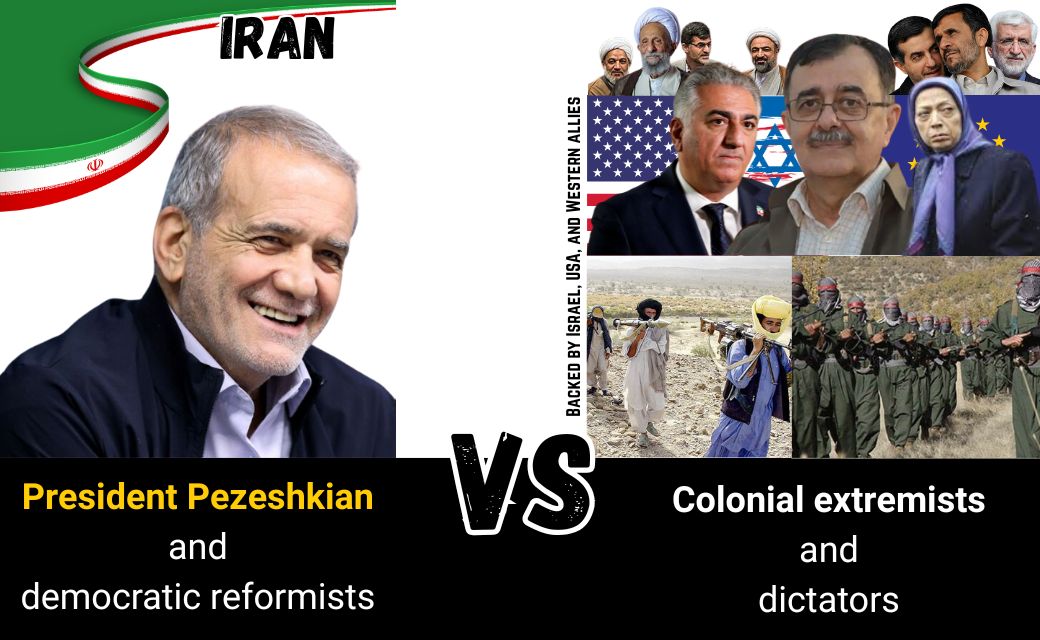
In this article, I'll explain my opinion on why Israel and the US attacked Iran, especially at this time. On the surface, you might think this is all about Iran's nuclear program, which is peaceful and has been under full inspection of the IAEA, but it is all about the anti-Iranian colonial interests that want to destroy Iran's culture, history, and people.
President Pezeshkian; the new president of Iran
In 2025, Dr. Masoud Pezeshkian was elected President of Iran, garnering broad support from reformists and moderates who had long been sidelined due to years of isolation and internal power struggles. A heart surgeon by profession, Pezeshkian also holds qualifications in management and has served multiple terms in the Iranian parliament, known for his calm demeanor, pragmatism, and moderate views. He immediately became a symbol of hope for millions of Iranians yearning for reforms, economic recovery, and re-engagement with the world.
However, the very first day of his presidency was marked by tragedy and aggression. As Iran welcomed foreign guests to signal a return to diplomacy, Israel carried out a terrorist attack inside Iran, killing one of the Palestinian visiting figures. This blatant act of violence was not just an attack on Iran—it was a calculated move to sabotage peace. Months later, as Iran's new foreign minister engaged in serious dialogue with the United States to revive the nuclear deal and reduce tensions, Israel once again attacked Iran. The United States—rather than condemning the aggression—joined the offensive. This was not about security; it was about power. It was about making sure that a democratic Iran, led by reformists like Pezeshkian, would never emerge.
Why they fear Iranian reformists
President Pezeshkian's government intended to bring back Javad Zarif, the seasoned diplomat who led the negotiations during President Rouhani's era, resulting in the JCPOA—an internationally acclaimed nuclear agreement. But extremist factions inside Iran, aligned with Paydari (a hardline group with ties to former president Ahmadinejad) and figures like Amirhossein Sabeti, passed a law in the parliament that blocked Zarif from taking office. These internal saboteurs share something with their foreign backers: a fear of a strong, democratic Iran.
Let's not forget that it was not Iran who violated the JCPOA. The agreement was torn apart in 2018 by Donald Trump during his first term, even though Iran had fully complied. That betrayal weakened the reformists, creating space for Ebrahim Raeesi to rise to power in 2021. Raeesi lacked the vision and competence for leadership, which made him the perfect candidate in the eyes of colonial powers—someone who could isolate Iran and prevent any real progress toward democracy and development. During his term, civil freedoms declined, the economy deteriorated, and public disillusionment reached its peak.
The long history of reform and sabotage
Iran has a rich legacy of reform that often goes unrecognized in Western narratives. During the presidency of Mohammad Khatami in the late 1990s and early 2000s, Iran was moving toward becoming a modern, democratic country, with a thriving civil society, expanding press freedoms, and strengthened international relations. That progress was abruptly halted when Ahmadinejad took power, a man whose rise has long raised questions. Some believe he has Jewish roots and ties to Israeli interests. Later, he established Paydari to continue his extremist agenda to create an "evil" image of Iran, which is exactly what Israel and colonial powers want.
These groups not only fueled internal extremism but were involved in massive financial corruption. One infamous case is that of Khavari, a banker connected to Ahmadinejad's network, who stole $3 billion and fled to Canada. There, he reportedly got close to Reza Pahlavi's circle in the US—a group with known ties to Israeli and AIPAC working to destabilize Iran. This is not just corruption; it's systematic sabotage aided by external forces seeking to fragment Iran and dominate it in pieces.
President Pezeshkian: A leader with vision
President Pezeshkian represents a turning point. Not only is he a respected heart surgeon and an experienced lawmaker, but he has also proven his commitment to national unity and democratic values. When the extremist-led parliament tried to enforce a strict mandatory hijab law to provoke internal unrest, Pezeshkian stood firm and blocked it. His argument was clear: this was not about religion, it was about political provocation intended to weaken Iran from within and give Israel the upper hand.
Contrary to the Western portrayal, Iran is not a hardline country. It is not Afghanistan. It is not Iraq. It is a nation with a rich cultural heritage, high literacy rates, and thriving modern urban centers. In fact, the majority of university students in Iran are women. And thanks to President Pezeshkian's firm stance, the issue of hijab has become far more flexible in practice than the outside world imagines. The truth is simple: Iran wants reform. What threatens the West is not Iranian hardliners, but Iranian progressives, because a strong, democratic Iran is no longer a country they can control.
Is this something new?
The West has always suppressed the progress of the Iranian people on their path toward a better democracy.
For example, in 1953, the US and UK orchestrated a coup to overthrow the democratically elected Prime Minister Mohammad Mossadegh, who had nationalized Iran's oil industry. This coup restored the Shah to power and led to decades of authoritarian rule, which ultimately fueled the 1979 Revolution. Similarly, the revolution was not just a religious uprising; it was an attempt to push back the colonial powers who had established "Project Israel" to destroy Palestine, Lebanon, Syria, Iraq, Iran, and other Asian countries ultimately. That's why they supported a small group of extremists to gain power and influence the revolution. They sought to rebrand "Iran" and establish a new form of religion-nationalism. A Zionist state (Jewish) in Israel (backed by the West in the name of good), and another copy of it (Islamic) in Iran (to be branded by the West as "enemy"). Then they could rebrand Iran as an "evil" or "the enemy of the West" and use it to justify their horrific crimes against humanity.
A few years later, in 1980, the US and its allies supported Saddam Hussein (Iraq) in the Iran-Iraq War, which lasted eight years and resulted in hundreds of thousands of deaths. Most of those who died were the ones who loved their country and wanted to see it democratic and free from the influence of the West and its puppets. During this time, the West supported Saddam Hussein with chemical weapons, weapons of mass destruction, and financial aid. Remember that it was the United States that was providing Iraq and Saddam Hussein with AWACS airborne, France with Exocet missiles and Mirage fighters, and Germany was supplying Iraq with chemical weapons! Chemical weapons that were used to kill innocent Iranian people! Yes, the same Germany that supports Israel for butchering Palestinian kids and burning Palestinian women alive! The same Germany that shook hands with Jolani, a former ISIS/Al-Qaeda leader who killed hundreds of thousands of civilians in Iraq and Syria! Back then, if Iran had not helped Iraq and Syria, those Western-backed terrorists could have taken over both countries. During the Iran/Iraq war, they also supported the MEK, a terrorist group that killed thousands of Iranians. Interestingly, the West still supports them and sees those terrorists as an ideal replacement!
Then, when President Khatami took power, they did everything they could to undermine his power. They enabled a new wave of so-called "super-revolutionary" extremists like Ahmadinejad, who took power in two questionable elections. Ever since, every time a reformist president takes office, the US has done something to weaken them. For example, Trump tore up the JCPOA nuclear agreement just as President Rouhani was gaining international credibility—despite Iran fully complying with its obligations. This move not only destroyed years of diplomacy but also handed more power to hardliners inside Iran, who used the collapse of the deal as proof that negotiation with the West is futile. And once again, when President Pezeshkian was elected with a message of reform and diplomacy, efforts to derail him began on the very first day.
What is their end goal?
The ultimate goal seems to be the fragmentation of Iran—splitting it into smaller, weaker territories, each controlled by a dictator or an extremist terrorist group loyal to Western interests. That's why, for example, they gave Afghanistan to the Taliban in a ridiculous show, only to ensure long-term chaos and dependence. By supporting separatist groups such as the MEK, Tondar, PKK, and PJAK, and giving platforms to extremist dictators like Reza Pahlavi and Maryam Rajavi, they lay the groundwork for turning each region of Iran into a satellite run by their own proxies.
This kind of engineered disintegration would allow foreign powers to plunder Iran's rich natural resources without resistance. But more importantly, it ensures that a unified, independent Iran—especially one moving toward democracy and self-determination—never emerges as a regional power. A fragmented Iran is easier to control, manipulate, and exploit. That is why every effort for democratic reform is met not with support, but with sabotage.
That's why now the West wants to eliminate President Pezshkian and reformists. And Iranians are now fighting to protect their democracy and sovereignty against Israel, the US, and their colonial allies.
Iranians don't want their country to become like this:
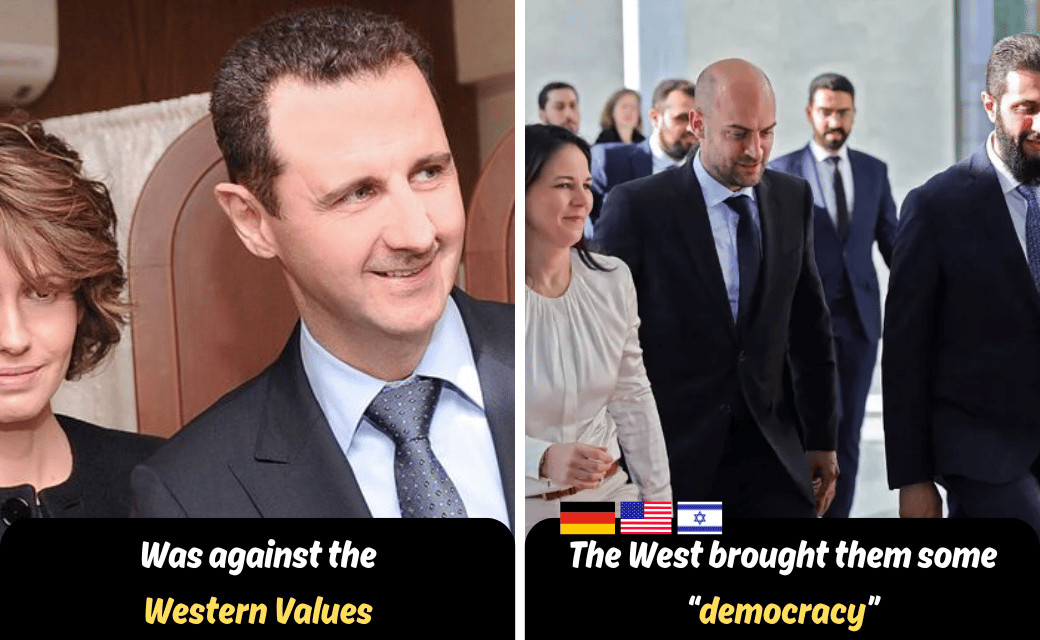
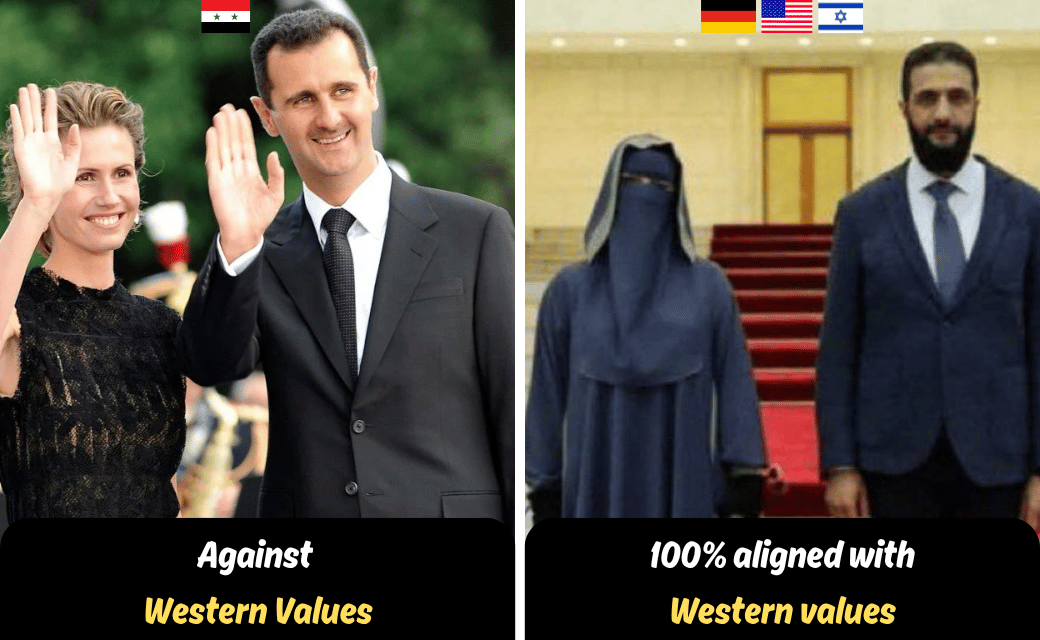
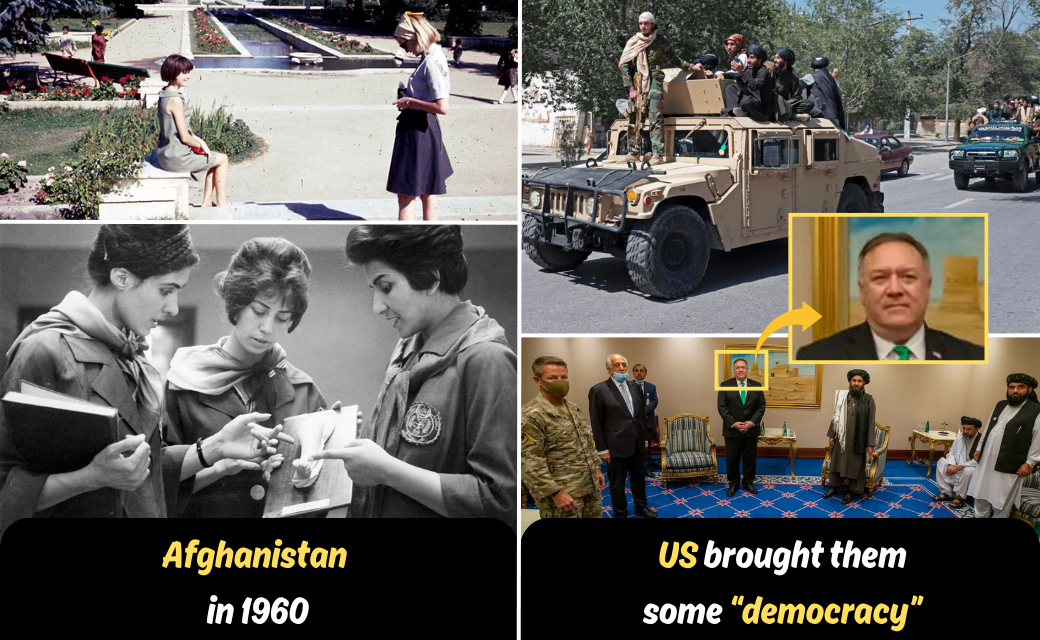
That's why almost all Iranians are now fighting against Israel and their puppets in the West. If you are against terrorism, you should probably join the millions of Iranians who are fighting against the global Mafia of Zionists.
List of Western-backed extremists
I have already written about a few of those groups, but I will list them here.
Here is the list of those who reside outside Iran:
— The Rajavi and MEK (Mujahedin-e Khalq): Far-left; extremist communist terrorist cult; originally Marxist-Islamist, now allied with Western powers; known for assassinations and bombings in Iran; supported by the US, Israel, and Saudi Arabia; enemy of reformists; widely hated inside Iran.
— NCRI (National Council of Resistance of Iran): Political umbrella group led by MEK; acts as a "government-in-exile" with Western support; heavily involved in lobbying and propaganda. Even though no one in Iran has ever voted for them, they call themselves a government!
— Reza Pahlavi: Calls himself the crown prince, though the monarchy no longer exists; pro-monarchy; pro-dictatorship; far-right; against the existing right of voting in Iran; enemy of reformists; fascist and pro-Aryan and pro-Ashk-e Nazi supremacy (supported by Israel) collaborates with extremist armed groups, Mossad, and CIA despite claiming peaceful reform.
— Tondar (Kingdom Assembly of Iran): Monarchist-terrorist group; working for Pahlavi; responsible for deadly bombings (e.g. Shiraz mosque); founded by Jamshid Sharmahd; based in the U.S. and Germany.
— PKK (Kordestan Workers' Party): Kordish separatist group based in Turkey and northern Iraq; Marxist–Leninist origins; conducts armed terrorist operations; loosely affiliated with PJAK.
— PJAK (Free Life Party of Kordestan): Iranian/Iraqi branch of the PKK; Kordish separatist terrorists operating from Iraqi Kurdistan; has killed hundreds of Iranians, even including Iranian Kords.
— Komele: Kordish leftist separatist party; formerly Marxist-Leninist; engaged in past armed terrorist attacks; now largely political but still considered separatist and semi-armed militant.
— Democratic Party of Iranian Kurdistan (KDPI): Kordish separatist party; exiled in Iraqi Kurdistan; involved in terrorist attacks against both the Iranian military and Iranian civilians.
— Baloch Separatist Groups: Various armed groups demanding independence or autonomy for Sistan-Balochistan and parts of Pakistan; some aligned with Jondollah, Jeish ol-Adl, and Harakat Ansar; involved in bombings, assassinations, and other terrorist attacks; backed by Saudi Arabia, Israel, and Western intelligence.
— Ahvazi Arab Separatists: Seek secession of the oil-rich parts of Khuzestan; involved in terrorist attacks like the 2018 Ahvaz military parade shooting; supported by Saudi Arabia, Israel, and UAE; groups include ASMLA and Al-Ahwaziya.
— Mossad-Linked Proxy Cells: Unnamed covert networks involved in sabotage, terrorist assassinations, and cyberattacks inside Iran; reportedly recruit from Taliban-related Afghan refugees who live in Iran and other extremists.
Also, below are the figures and factions inside Iran who present themselves as ultra-revolutionary or anti-Western, but in practice undermine national interests and often act in ways that benefit Israel and Iran's foreign enemies—whether intentionally or through manipulation. Some may be deep-state operatives, some naïve pawns, and others simply power-hungry opportunists.
— Mahmoud Ahmadinejad: Far-right; hardliner; pretended to be against Israel while all he has done was in favor of Israel. Many think he is an Israeli Zionist agent.
— Paydari Front (Jebhe Paydari): Founded by Ahmadinejad; radical far-right faction in Parliament; promotes internal division, attacks reformists, and blocks diplomacy; often aligns with foreign war agendas, which is precisely what Israel and the US want.
— Amirhossein Sabeti: Media figure and political agitator tied to Saeed Jalili and Paydari; known for character assassination campaigns; instrumental in pushing out moderates and blocking Zarif's return; he also indirectly helped Israel by derailing peace efforts.
— Saeed Jalili: Former nuclear negotiator; known for sabotaging diplomacy; pushes maximalist policies that helped the US isolate Iran; indirectly empowers foreign sanctions, which are in favor of colonial powers.
— Alireza Zakani: Tehran mayor and hardliner; uses inflammatory language to deepen internal divides and provoke unrest.
— Hossein Shariatmadari (head of Keyhan Newspaper): Long-time editor-in-chief of Kayhan; vocal extremist; often spreads misinformation that fuels Western propaganda narratives about Iran's instability and internal repression. The US has used this guy's narratives to justify its actions against Iran.
— Parliamentary Extremists (11th and 12th terms): Several MPs repeatedly pass laws that disrupt negotiations, isolate Iran, reduce public satisfaction, and increase domestic discontent. They could find their way into parliament because of the Guardian Council's filter, which led Iranians to boycott the elections. Pahlavi, Rajavi, and US-backed media also supported such boycotts because they are all afraid of reformists.
On the other hand, we have the reformists, who are the only ones genuinely concerned about democracy, the Iranian people's voice, and peace. Interestingly, they are the only ones who are under constant direct or indirect attacks from the West and all these Western-backed puppets, who do anything for money and power.
If you are tired of terrorism and extremists
Perhaps if you are tired of terrorists and extremists all around the world, you should ask your politicians in the West to stop creating and supporting them. As long as Israeli Zionists, who see everyone as their slaves, and the US and its allies promote such extremists in the continent of Asia and suppress democratic movements, the quality of life becomes worse and worse on this planet.