Hire me
Pooyan Razian

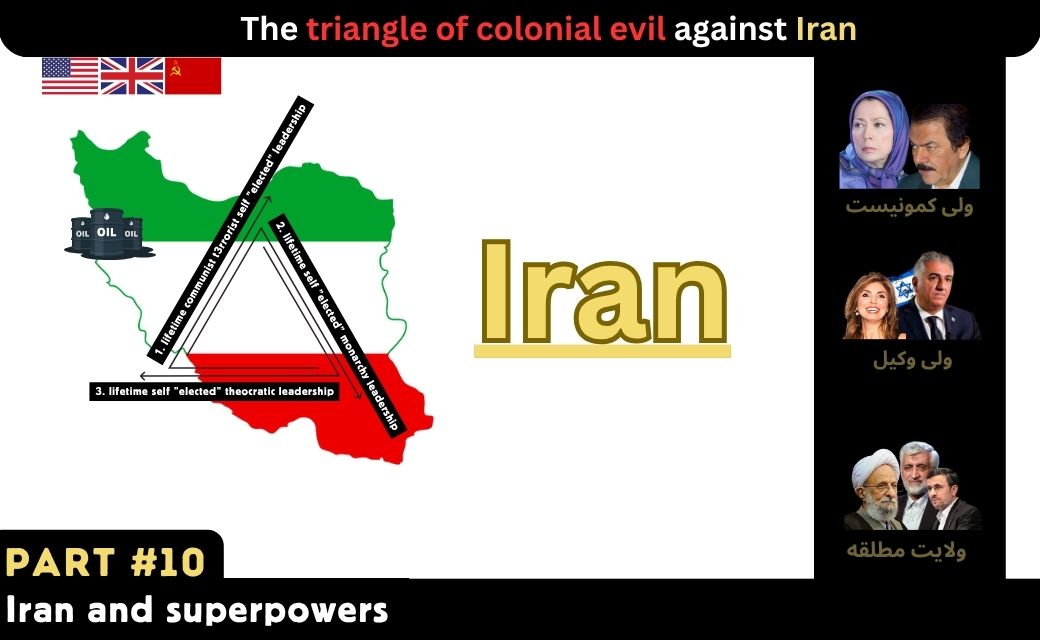
Triangle of colonial evil against Iran (part 10)

Triangle of colonial evil against Iran (part 10)
Published: April 23, 2024

Triangle of colonial evil against Iran Part 10: Iran and superpowers

Part 10: Iran and superpowers

This article is a part of an eleven part series:

  1. What is this article about
  2. Early days of the democratic movement
  3. The kingdom of Pahlavi

Pre-revolution

Revolution

  1. Reza Pahlavi
  2. Rajavi and MEK
  3. Recent political activities

Reformists

  1. Iran and superpowers 👈

Conclusion

Iran and Russia
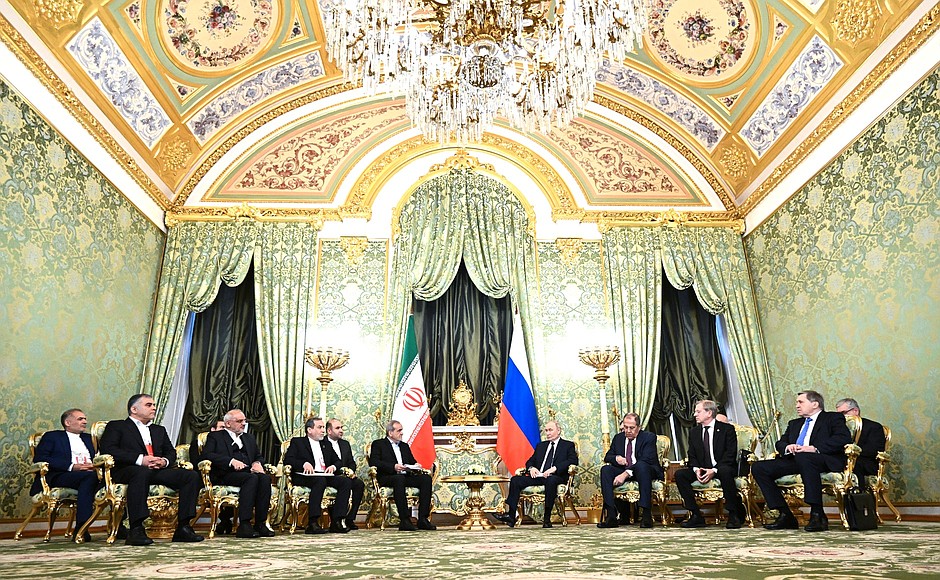
Russian President hosted President Pezeshkian of Iran to signing a broad pact between Moscow and Tehran.

Iran and Russia — source

Historically, contacts between Russians and Persians extend back more than a millennium. There were known commercial exchanges as early as the 8th century AD between Persia and Russia. They were interrupted by the Mongol invasions in the 13th and 14th centuries (also related to the roots of Ashk-e Nazis), but started up again in the 15th century with the rise of the state of Muscovy. In the 9th–11th century AD, there were repetitive raiding parties undertaken by the Rus' between 864 and 1041 on the Caspian Sea shores of Iran as part of the Caspian expeditions of the Rus', where Iran lost a big part of its northern territories.

In a recent era, formal relations began in 1521 during the Safavid dynasty. In 1717, Iran and Russians signed their first formal agreement, the Russo-Iranian Treaty, aiming to enhance trade and political ties.

In the 19th century, the Russian Empire again expanded into territories in the Caucasus and the Caspian region, leading to another round of conflicts with Persia. During World War II, the Soviet Union and Britain jointly invaded Iran in 1941 to secure supply routes, which left lasting impacts on Iran's view of its northern neighbor.

Even though, before the revolution, the Soviet Union had tried to influence Iran's young political activists by supporting communist parties like Motalefe Eslami communists or armed extremist communists like MEK (Mojaheddin Khalgh), their propaganda machine was not entirely successful. After the 1979 Revolution, Iran's relations with the Soviet Union were cautious. However, following the collapse of the Soviet Union in 1991, Iran and Russia developed closer ties. With an official request from Bashar Asad, President of Syria back then, they collaborated against ISIS (a terrorist group founded by Mossad/Israel) and defeated them in Syria. Later, Israel helped ISIS and Jolani to take over Syria. In January 2025, the two nations signed a comprehensive strategic partnership to strengthen their cooperation further.

After the Saudi Arabs who attacked Iran 1400 years ago and took most of the country, Russians historically have always been the second-biggest enemy of Iran. Throughout the past 300 years, Russians (and Mongols) have taken a significant portion of our country, Iran, and they have never been an honest neighbor, even during the past few decades. Russia has never used its UN Veto right in favor of Iran. Even the Soviet Union, together with the US and Western allies, helped Saddam Hussein in the war against Iran.

In fact, if it were not for the US dishonesty, especially with Trump's dishonesty and the push from Europe, Iran would have never been such an ally to Russia! Nowadays, with the push from Israel, the US, and Western allies, both Iran and China had no choice but to get closer to Russia. This happened ONLY because of the US, the inhumane anti-Asia colonial "Project Israel", and far-right Western politicians, who still follow the path of H1tler!

Iran and the UK
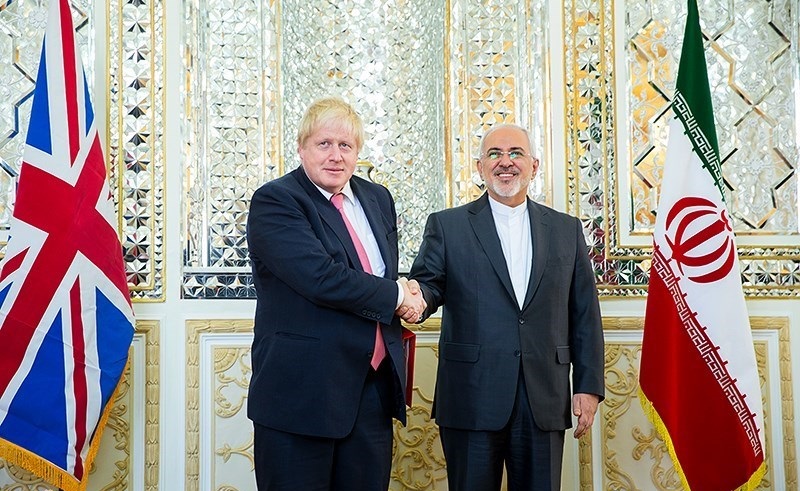
Iranian Foreign Minister Mohammad Javad Zarif with UK Foreign Secretary Boris Johnson, 9 December 2017

Iran and UK — source

Iran and the United Kingdom have a long history of interactions, beginning in the late 13th century when King Edward I of England sent Geoffrey of Langley to the Ilkhanid court to seek an alliance. In the 19th century, Iran became significant to Britain as a buffer state protecting its interests in India. During this period, Britain encouraged conflicts between Iran and neighboring countries like Afghanistan to prevent any threats to India (Iran had previously taken parts of India before the UK).

In 1941, during World War II, British and Soviet forces jointly invaded Iran to secure supply routes, leading to the abdication of Reza Shah.

After Russia, the UK has been one of Iran's biggest enemies and has taken big parts of the country, stolen oil, gas, and other natural resources. They have stolen our historical monuments and influenced the country's politics. They have also been involved in coups and regime changes and have always been against the democratic movements.

Following the 1979 Revolution, relations between Iran and the UK became strained. In 2011, the British Embassy in Tehran was attacked by a far-right party close to Ahmadinejad and Saeed Jalili and "the pressure group", leading to its closure. However, diplomatic relations improved, and the embassy reopened in 2015. In 2022, the release of British-Iranian national Nazanin Zaghari-Ratcliffe, who had been detained in Iran since 2016, marked a significant event in their bilateral relations.

Iran and China
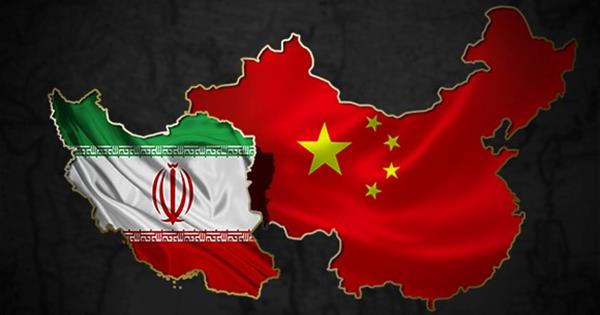
Iran and China

Iran and China — source

China and Iran have a long history of interactions, dating back to at least 200 BCE. During the Han dynasty, Chinese envoy Zhang Qian reported on the Parthian Empire (Persians), highlighting early connections along the Silk Road. In 751 CE, the Battle of Talas occurred between the Abbasid Caliphate, which included Persia, and China's Tang dynasty. Relations improved after the Abbasian won the battle, and there were no more conflicts between China and the Persians.

In the modern era, after the 1979 Revolution, Iran and China maintained diplomatic relations. In March 2021, the two countries signed a 25-year cooperation agreement to strengthen political, strategic, and economic ties. This agreement includes significant Chinese investments in Iran's oil, gas, and petrochemical sectors, which were important during the unjust US sanctions.

Throughout history, Iran has been a transit country between China and Europe. The Silk Road was the main route for trade between the two continents. In fact, many of the delicious foods you have, tea, rice, etc., have been exported to Europe through Iran as the central part of the Silk Road, and Turkey (Byzantine Empire, or East Roman Empire) as the last hub between Asia and Europe.

Both Iran and China could be great allies for the West. Instead, your far-right and far-left politicians decided to follow ZiØn1sts, who pay for their campaigns and promote them in their media, and are mainly interested in creating chaos in the world to make money from the war industry. An international mafia that wants us all to be their slaves!

Iran and the US
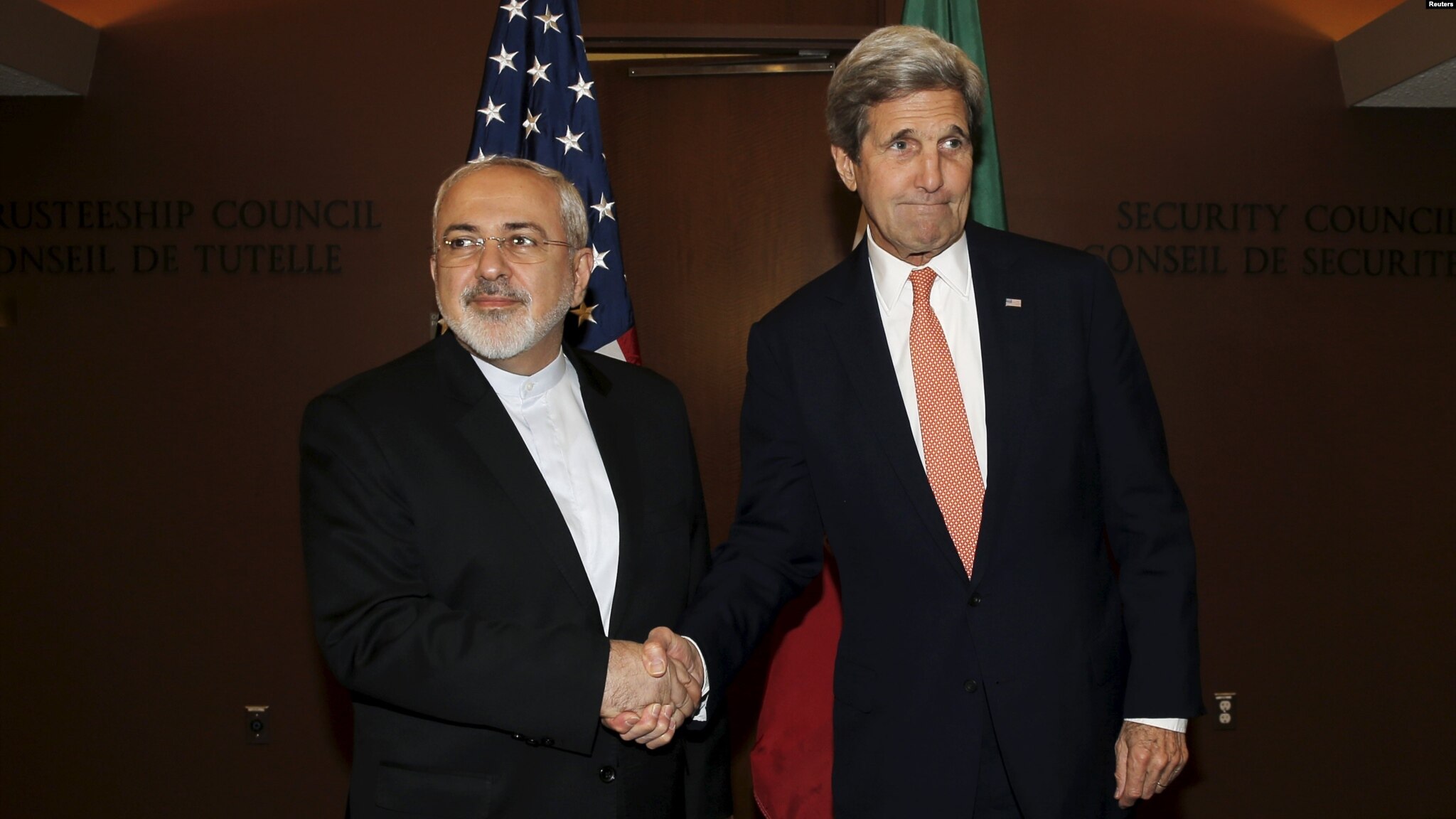
Iranian Foreign Minister, javad Zarif, shaking hands with the U.S. Secretary of State, John Kerry, at the United Nations in New York

Source

The relationship between Iran and the United States has been complex and evolving in the past three centuries.

Early relations

In the 1720s, American newspapers were pro-Iranian, especially during an Afghan emir revolt against the Safavian. Formal diplomatic relations began in 1856 when Iran’s Shah sent the first ambassador to the U.S. In 1883, the U.S. appointed its first diplomatic envoy to Iran, though ambassadorial ties were only established in 1944. Later, Amir Kabir, Prime Minister under King Nasereddin Shah, also initiated direct contacts with the American government in Washington.

The U.S. had little interest in Persian affairs but was seen as a neutral outsider. After World War I, Iran sought the help of Americans with financial reforms, although opposition forced an early withdrawal. By the late 19th century, talks were underway for an American-built railway from the Persian Gulf to Tehran.

Until World War II, U.S.-Iran relations were friendly. Many Iranians saw the U.S. as a "third force" against British and Russian influence, and American business leaders supported Iran’s modernization.

For example, below is a photo of Morgan Shuster and US officials at Atabak Palace, Tehran, in 1911. Iran's parliament appointed its group to reform and modernize Iran's Department of Treasury and Finance.
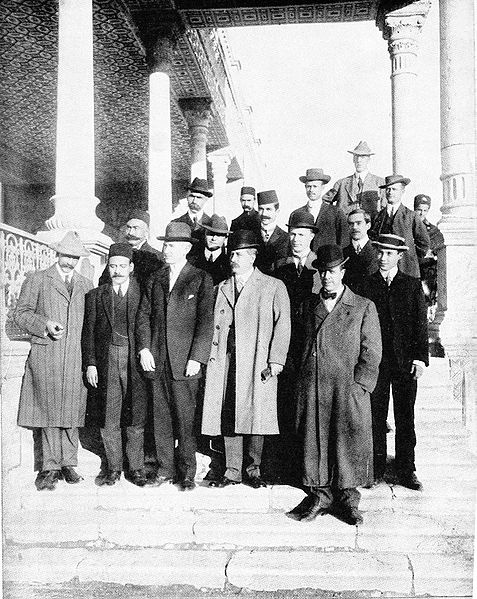
Morgan Shuster and US officials at Atabak Palace, Tehran, 1911

Source

Reza Shah

Iran and the United States established diplomatic ties in the early 20th century. Reza Shah (1925–1941) tried to modernize Iran while reducing foreign influence. During WWII, the Allies (the US, UK, and USSR) occupied Iran to secure supply lines to the Soviet Union and forced Reza Shah's abdication. They replaced him with his son, Mohammad Reza Pahlavi, to follow their orders.

Mohammad Reza Pahlavi

During this period, the U.S. helped overthrow Prime Minister Mossadegh in 1953, restoring the Shah's power. Iran was a key ally of the US, as they themselves had put him in power after overthrowing his father. During this time, opposition to the foreign-backed dictatorship grew, leading to the 1979 revolution. Before the revolution, the Shah was a key ally of the US, but later, when Emam Khomeini was in exile in Paris, the CIA got close to him and helped this new puppet overthrow the Shah.

Revolution

In the Iran-Iraq War (1980–88), the U.S. supported Saddam Hussein against Iran. Later, in 1988, in a terrorist attack, a US Navy warship shot down an Iranian passenger Air Flight 655, killing 290 civilians! That worsened the relationship, as this time, the US directly terrorized Iranian civilians.

Rouhani, Zarif & the Nuclear Deal

In 2015, during President Rouhani's term, Javad Zarif, the foreign minister, negotiated the JCPOA directly with the US and Western allies, lifting sanctions in exchange for nuclear limits.

Trump’s Maximum Pressure?

While Iran complied with everything agreed in the JCPOA, during Trump's first term, he withdrew from the deal in 2018, and then reinstated harsh sanctions against Iran, leading to economic struggles. Trump's dishonesty and the push from Israel and the UK forced Iran to get closer to Russia and China. During this time, Iran learned it had no choice but to invest in its own military and technology. In only a few years, Iran became the 11th country in the world to have the technology to launch a satellite into space and the 2nd to have precise hypersonic missiles right after China! (later, Russia copied the technology; the US and India followed)

Dr. Pezeshkian’s Presidency

Pezeshkian, the current president of Iran, mentioned earlier in 2024 that Iran is open to negotiation with the US only if the US can prove that they are honest and can be trusted. In return, when Trump began his second term, he imposed more sanctions on Iran right after taking office! This led the leader of Iran to interfere with the government and announce that the US has failed to prove honesty and trustworthiness.

Iran and Izrael

Izrael's genocide in Gaza

Israel's genocide — Source

Izrael was founded after a few agreements between German Nazis, Brits, and the US, out of the concept of Arab/Persian/Iranian/Muslim/Asian hatred. Their main goal was to colonize the whole Middle East, starting from Palestine, then Lebanon, Syria, Iraq, Iran, and finally the entire continent of Asia. Similar to what white supremacists did to the continent of Africa. As a result, Iran has never been an ally of Israel, even during the time of the Shah. Even though nowadays, Izraeli ZiØn1sts support Reza Pahlavi and his far-right gang, mainly because he is the grandson of Reza Shah, a close ally of H1tler, who had a similar hate-based ideology to the ZiØn1sts.

If you want to understand who ZiØn1sts are and what are the origins of Ashk-e Nazis, you should read part 3 of this article if you haven't already.

Iran and Europe
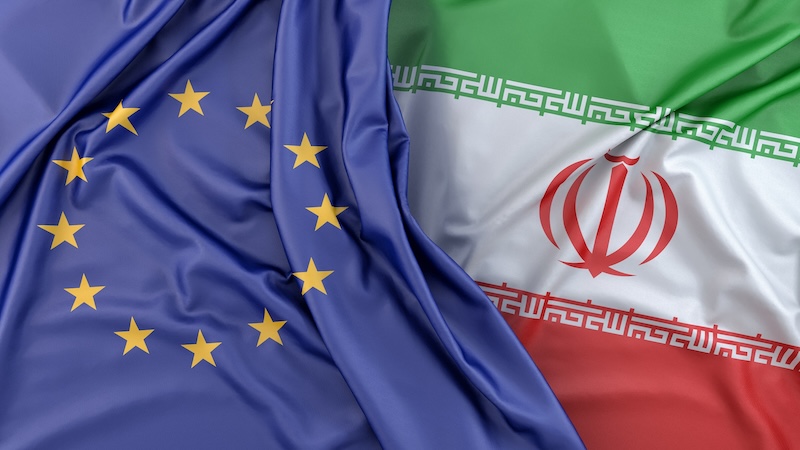
Iran and Europe

source

Iran’s interactions with European nations date back over 2,000 years, beginning with the Greco-Persian Wars (499–449 BCE) between the Achaemenid Empire and Greek city-states. During the Parthian and Sassanian periods (247 BCE–651 CE), Iran had ongoing conflicts and trade relations with the Roman and Byzantine Empires.

During the medieval period, European-Iranian interactions were shaped by trade and diplomacy. The Silk Road facilitated commerce between Persia and European merchants, particularly from Venice and Genoa. In the 16th century, the Safavid Empire established diplomatic ties with Portugal, Spain, England, and the Dutch Republic, often seeking European allies against the Ottoman Empire. By the 19th century, Iran was caught between Russian and British imperial ambitions, leading to a series of concessions and interventions that weakened its sovereignty.

In the 20th and 21st centuries, Iran’s relations with European countries fluctuated due to political changes. The 1953 CIA-and-UK-backed coup against Prime Minister Mossadegh and the 1979 Revolution strained ties with the West.

After the revolution, the UK, France, and Germany helped Saddam Hussein in the war against Iran by providing him with chemical weapons and other military equipment! Later, the 2015 Iran Nuclear Deal (JCPOA) with the US, backed by the EU, marked a high point in cooperation, but tensions resurfaced after Trump's withdrawal in 2018. In addition, in the past few decades, Europe has been a safehouse for some of the radical anti-Iranian t3rrorist or separatist groups like MEK and PJAK. They freely reside in countries such as France, Sweden, and Albania.

Cultural exchanges

Many of the cultural exchanges between the two continents have been through Iran. For example, eating with a spoon and fork was invented in Iran and later exported to Europe.

Spoons for dining have been used in Iran for thousands of years. The oldest founded dining spoon dates back to the 500s BCE (at the time of the Achaemenid dynasty) or earlier and was discovered in ancient Pasargadae, southwest Iran. It is currently housed at the National Museum of Iran. The cutlery discovered in Pasargadae appears to pre-date the similar Greco-Roman cutlery by almost 1000 years, proving the Romans learned it from the Persians throughout time.
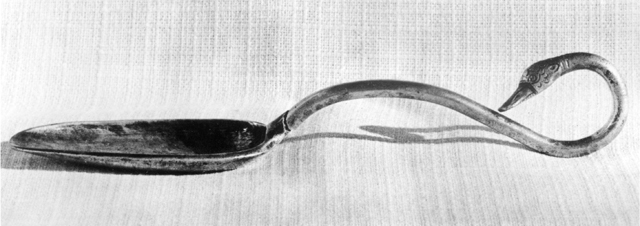
Iran, where the world's oldest dining spoon was discovered.

Source

Another example is Backgammon, which originated in Iran and was later exported to Europe.

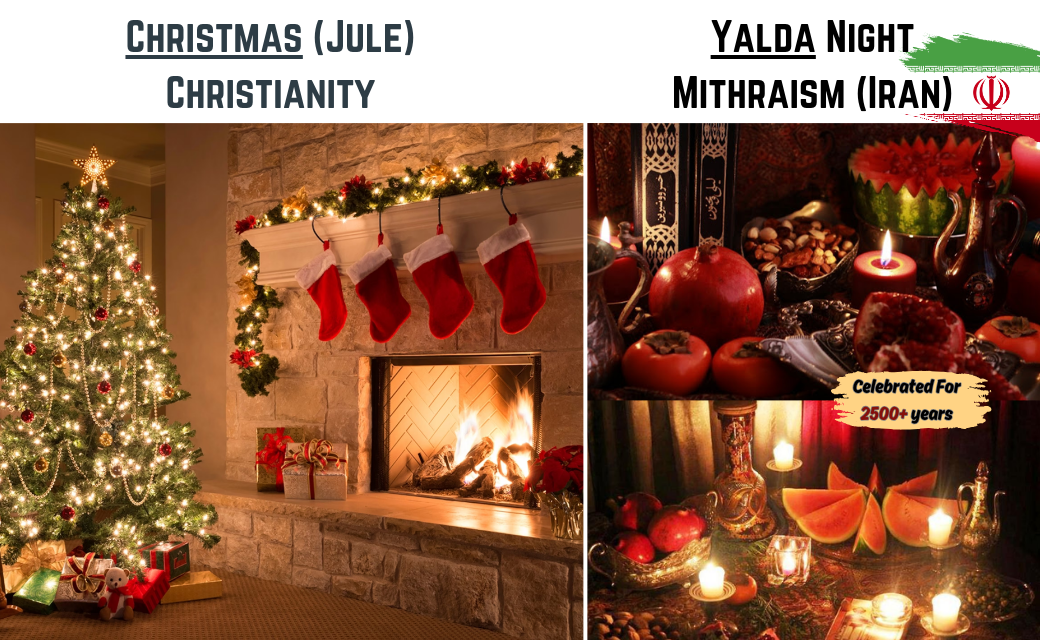
Another example is Christmas, which is influenced by a Persian tradition called Yalda (Jule in Danish, pronounced as Yule - the oldest Nordic language, influenced by Ashk-e Nazis), which is the longest night of the year and comes from Mithraism, Iranians' main religion before Zarathustra, before the attack of Arabs/Islam. Iranians celebrate Yalda because, from then on, the length of days increases, and the sun gives us more light and energy. And we, Iranians, value energy, light, knowledge, and nature.

Yalda Night (Shabe Chelle) dates back to 500-600 BC (or even more) as a gathering of friends and family to ward off the evil of darkness on the longest night and to welcome the new day and the beginning of longer days. More info can be found here. Similar to Christmas, people gather together, eat, and drink.

Yalda, similar to Christmas, has a red theme to remember the blood of Mithra, the sun god, who was born on this day. Different variations of this tradition were brought from the Persian Emptier to India and Europe. Throughout time, it was adopted by the Romans and eventually celebrated in the name of the Massiah's birthday. Iranian's Yalda Night, the origin of Christmas
Some more examples:

Sepandarmazgan - The Iranian Day of Love. (dates back around 1500 BC, source)

Tirgan Festival - The longest day of the year - the first day of summer.

Chaharshanbe Suri - The night before the new year when people jump over the fire and celebrate with fireworks.

Thank you for reading this far. Next part?

Part 11: Conclusion

If you liked the article, feel free to share it with your friends, family, or colleagues. You can also follow me on Medium or LinkedIn.

Copyright & Disclaimer

  • All content provided on this article is for informational and educational purposes only. The author makes no representations as to the accuracy or completeness of any information on this site or found by following any link on this site.
  • All the content is copyrighted, except the assets and content I have referenced to other people's work, and may not be reproduced on other websites, blogs, or social media. You are not allowed to reproduce, summarize to create derivative work, or use any content from this website under your name. This includes creating a similar article or summary based on AI/GenAI. For educational purposes, you may refer to parts of the content, and only refer, but you must provide a link back to the original article on this website. This is allowed only if your content is less than 10% similar to the original article.
  • While every care has been taken to ensure the accuracy of the content of this website, I make no representation as to the accuracy, correctness, or fitness for any purpose of the site content, nor do I accept any liability for loss or damage (including consequential loss or damage), however, caused, which may be incurred by any person or organization from reliance on or use of information on this site.
  • The contents of this article should not be construed as legal advice.
  • Opinions are my own and not the views of my employer.
  • English is not my mother-tongue language, so even though I try my best to express myself correctly, there might be a chance of miscommunication.
  • Links or references to other websites, including the use of information from 3rd-parties, are provided for the benefit of people who use this website. I am not responsible for the accuracy of the content on the websites that I have put a link to and I do not endorse any of those organizations or their contents.
  • If you have any queries or if you believe any information on this article is inaccurate, or if you think any of the assets used in this article are in violation of copyright, please contact me and let me know.

Triangle of colonial evil against Iran (part 10)

Triangle of colonial evil against Iran (part 10)
Published: April 23, 2024

Triangle of colonial evil against Iran Part 10: Iran and superpowers

Part 10: Iran and superpowers

This article is a part of an eleven part series:

  1. What is this article about
  2. Early days of the democratic movement
  3. The kingdom of Pahlavi

Pre-revolution

Revolution

  1. Reza Pahlavi
  2. Rajavi and MEK
  3. Recent political activities

Reformists

  1. Iran and superpowers 👈

Conclusion

Iran and Russia

Russian President hosted President Pezeshkian of Iran to signing a broad pact between Moscow and Tehran.

Iran and Russia — source

Historically, contacts between Russians and Persians extend back more than a millennium. There were known commercial exchanges as early as the 8th century AD between Persia and Russia. They were interrupted by the Mongol invasions in the 13th and 14th centuries (also related to the roots of Ashk-e Nazis), but started up again in the 15th century with the rise of the state of Muscovy. In the 9th–11th century AD, there were repetitive raiding parties undertaken by the Rus' between 864 and 1041 on the Caspian Sea shores of Iran as part of the Caspian expeditions of the Rus', where Iran lost a big part of its northern territories.

In a recent era, formal relations began in 1521 during the Safavid dynasty. In 1717, Iran and Russians signed their first formal agreement, the Russo-Iranian Treaty, aiming to enhance trade and political ties.

In the 19th century, the Russian Empire again expanded into territories in the Caucasus and the Caspian region, leading to another round of conflicts with Persia. During World War II, the Soviet Union and Britain jointly invaded Iran in 1941 to secure supply routes, which left lasting impacts on Iran's view of its northern neighbor.

Even though, before the revolution, the Soviet Union had tried to influence Iran's young political activists by supporting communist parties like Motalefe Eslami communists or armed extremist communists like MEK (Mojaheddin Khalgh), their propaganda machine was not entirely successful. After the 1979 Revolution, Iran's relations with the Soviet Union were cautious. However, following the collapse of the Soviet Union in 1991, Iran and Russia developed closer ties. With an official request from Bashar Asad, President of Syria back then, they collaborated against ISIS (a terrorist group founded by Mossad/Israel) and defeated them in Syria. Later, Israel helped ISIS and Jolani to take over Syria. In January 2025, the two nations signed a comprehensive strategic partnership to strengthen their cooperation further.

After the Saudi Arabs who attacked Iran 1400 years ago and took most of the country, Russians historically have always been the second-biggest enemy of Iran. Throughout the past 300 years, Russians (and Mongols) have taken a significant portion of our country, Iran, and they have never been an honest neighbor, even during the past few decades. Russia has never used its UN Veto right in favor of Iran. Even the Soviet Union, together with the US and Western allies, helped Saddam Hussein in the war against Iran.

In fact, if it were not for the US dishonesty, especially with Trump's dishonesty and the push from Europe, Iran would have never been such an ally to Russia! Nowadays, with the push from Israel, the US, and Western allies, both Iran and China had no choice but to get closer to Russia. This happened ONLY because of the US, the inhumane anti-Asia colonial "Project Israel", and far-right Western politicians, who still follow the path of H1tler!

Iran and the UK

Iranian Foreign Minister Mohammad Javad Zarif with UK Foreign Secretary Boris Johnson, 9 December 2017

Iran and UK — source

Iran and the United Kingdom have a long history of interactions, beginning in the late 13th century when King Edward I of England sent Geoffrey of Langley to the Ilkhanid court to seek an alliance. In the 19th century, Iran became significant to Britain as a buffer state protecting its interests in India. During this period, Britain encouraged conflicts between Iran and neighboring countries like Afghanistan to prevent any threats to India (Iran had previously taken parts of India before the UK).

In 1941, during World War II, British and Soviet forces jointly invaded Iran to secure supply routes, leading to the abdication of Reza Shah.

After Russia, the UK has been one of Iran's biggest enemies and has taken big parts of the country, stolen oil, gas, and other natural resources. They have stolen our historical monuments and influenced the country's politics. They have also been involved in coups and regime changes and have always been against the democratic movements.

Following the 1979 Revolution, relations between Iran and the UK became strained. In 2011, the British Embassy in Tehran was attacked by a far-right party close to Ahmadinejad and Saeed Jalili and "the pressure group", leading to its closure. However, diplomatic relations improved, and the embassy reopened in 2015. In 2022, the release of British-Iranian national Nazanin Zaghari-Ratcliffe, who had been detained in Iran since 2016, marked a significant event in their bilateral relations.

Iran and China

Iran and China

Iran and China — source

China and Iran have a long history of interactions, dating back to at least 200 BCE. During the Han dynasty, Chinese envoy Zhang Qian reported on the Parthian Empire (Persians), highlighting early connections along the Silk Road. In 751 CE, the Battle of Talas occurred between the Abbasid Caliphate, which included Persia, and China's Tang dynasty. Relations improved after the Abbasian won the battle, and there were no more conflicts between China and the Persians.

In the modern era, after the 1979 Revolution, Iran and China maintained diplomatic relations. In March 2021, the two countries signed a 25-year cooperation agreement to strengthen political, strategic, and economic ties. This agreement includes significant Chinese investments in Iran's oil, gas, and petrochemical sectors, which were important during the unjust US sanctions.

Throughout history, Iran has been a transit country between China and Europe. The Silk Road was the main route for trade between the two continents. In fact, many of the delicious foods you have, tea, rice, etc., have been exported to Europe through Iran as the central part of the Silk Road, and Turkey (Byzantine Empire, or East Roman Empire) as the last hub between Asia and Europe.

Both Iran and China could be great allies for the West. Instead, your far-right and far-left politicians decided to follow ZiØn1sts, who pay for their campaigns and promote them in their media, and are mainly interested in creating chaos in the world to make money from the war industry. An international mafia that wants us all to be their slaves!

Iran and the US

Iranian Foreign Minister, javad Zarif, shaking hands with the U.S. Secretary of State, John Kerry, at the United Nations in New York

Source

The relationship between Iran and the United States has been complex and evolving in the past three centuries.

Early relations

In the 1720s, American newspapers were pro-Iranian, especially during an Afghan emir revolt against the Safavian. Formal diplomatic relations began in 1856 when Iran’s Shah sent the first ambassador to the U.S. In 1883, the U.S. appointed its first diplomatic envoy to Iran, though ambassadorial ties were only established in 1944. Later, Amir Kabir, Prime Minister under King Nasereddin Shah, also initiated direct contacts with the American government in Washington.

The U.S. had little interest in Persian affairs but was seen as a neutral outsider. After World War I, Iran sought the help of Americans with financial reforms, although opposition forced an early withdrawal. By the late 19th century, talks were underway for an American-built railway from the Persian Gulf to Tehran.

Until World War II, U.S.-Iran relations were friendly. Many Iranians saw the U.S. as a "third force" against British and Russian influence, and American business leaders supported Iran’s modernization.

For example, below is a photo of Morgan Shuster and US officials at Atabak Palace, Tehran, in 1911. Iran's parliament appointed its group to reform and modernize Iran's Department of Treasury and Finance.

Morgan Shuster and US officials at Atabak Palace, Tehran, 1911

Source

Reza Shah

Iran and the United States established diplomatic ties in the early 20th century. Reza Shah (1925–1941) tried to modernize Iran while reducing foreign influence. During WWII, the Allies (the US, UK, and USSR) occupied Iran to secure supply lines to the Soviet Union and forced Reza Shah's abdication. They replaced him with his son, Mohammad Reza Pahlavi, to follow their orders.

Mohammad Reza Pahlavi

During this period, the U.S. helped overthrow Prime Minister Mossadegh in 1953, restoring the Shah's power. Iran was a key ally of the US, as they themselves had put him in power after overthrowing his father. During this time, opposition to the foreign-backed dictatorship grew, leading to the 1979 revolution. Before the revolution, the Shah was a key ally of the US, but later, when Emam Khomeini was in exile in Paris, the CIA got close to him and helped this new puppet overthrow the Shah.

Revolution

In the Iran-Iraq War (1980–88), the U.S. supported Saddam Hussein against Iran. Later, in 1988, in a terrorist attack, a US Navy warship shot down an Iranian passenger Air Flight 655, killing 290 civilians! That worsened the relationship, as this time, the US directly terrorized Iranian civilians.

Rouhani, Zarif & the Nuclear Deal

In 2015, during President Rouhani's term, Javad Zarif, the foreign minister, negotiated the JCPOA directly with the US and Western allies, lifting sanctions in exchange for nuclear limits.

Trump’s Maximum Pressure?

While Iran complied with everything agreed in the JCPOA, during Trump's first term, he withdrew from the deal in 2018, and then reinstated harsh sanctions against Iran, leading to economic struggles. Trump's dishonesty and the push from Israel and the UK forced Iran to get closer to Russia and China. During this time, Iran learned it had no choice but to invest in its own military and technology. In only a few years, Iran became the 11th country in the world to have the technology to launch a satellite into space and the 2nd to have precise hypersonic missiles right after China! (later, Russia copied the technology; the US and India followed)

Dr. Pezeshkian’s Presidency

Pezeshkian, the current president of Iran, mentioned earlier in 2024 that Iran is open to negotiation with the US only if the US can prove that they are honest and can be trusted. In return, when Trump began his second term, he imposed more sanctions on Iran right after taking office! This led the leader of Iran to interfere with the government and announce that the US has failed to prove honesty and trustworthiness.

Iran and Izrael

Izrael's genocide in Gaza

Israel's genocide — Source

Izrael was founded after a few agreements between German Nazis, Brits, and the US, out of the concept of Arab/Persian/Iranian/Muslim/Asian hatred. Their main goal was to colonize the whole Middle East, starting from Palestine, then Lebanon, Syria, Iraq, Iran, and finally the entire continent of Asia. Similar to what white supremacists did to the continent of Africa. As a result, Iran has never been an ally of Israel, even during the time of the Shah. Even though nowadays, Izraeli ZiØn1sts support Reza Pahlavi and his far-right gang, mainly because he is the grandson of Reza Shah, a close ally of H1tler, who had a similar hate-based ideology to the ZiØn1sts.

If you want to understand who ZiØn1sts are and what are the origins of Ashk-e Nazis, you should read part 3 of this article if you haven't already.

Iran and Europe

Iran and Europe

source

Iran’s interactions with European nations date back over 2,000 years, beginning with the Greco-Persian Wars (499–449 BCE) between the Achaemenid Empire and Greek city-states. During the Parthian and Sassanian periods (247 BCE–651 CE), Iran had ongoing conflicts and trade relations with the Roman and Byzantine Empires.

During the medieval period, European-Iranian interactions were shaped by trade and diplomacy. The Silk Road facilitated commerce between Persia and European merchants, particularly from Venice and Genoa. In the 16th century, the Safavid Empire established diplomatic ties with Portugal, Spain, England, and the Dutch Republic, often seeking European allies against the Ottoman Empire. By the 19th century, Iran was caught between Russian and British imperial ambitions, leading to a series of concessions and interventions that weakened its sovereignty.

In the 20th and 21st centuries, Iran’s relations with European countries fluctuated due to political changes. The 1953 CIA-and-UK-backed coup against Prime Minister Mossadegh and the 1979 Revolution strained ties with the West.

After the revolution, the UK, France, and Germany helped Saddam Hussein in the war against Iran by providing him with chemical weapons and other military equipment! Later, the 2015 Iran Nuclear Deal (JCPOA) with the US, backed by the EU, marked a high point in cooperation, but tensions resurfaced after Trump's withdrawal in 2018. In addition, in the past few decades, Europe has been a safehouse for some of the radical anti-Iranian t3rrorist or separatist groups like MEK and PJAK. They freely reside in countries such as France, Sweden, and Albania.

Cultural exchanges

Many of the cultural exchanges between the two continents have been through Iran. For example, eating with a spoon and fork was invented in Iran and later exported to Europe.

Spoons for dining have been used in Iran for thousands of years. The oldest founded dining spoon dates back to the 500s BCE (at the time of the Achaemenid dynasty) or earlier and was discovered in ancient Pasargadae, southwest Iran. It is currently housed at the National Museum of Iran. The cutlery discovered in Pasargadae appears to pre-date the similar Greco-Roman cutlery by almost 1000 years, proving the Romans learned it from the Persians throughout time.

Iran, where the world's oldest dining spoon was discovered.

Source

Another example is Backgammon, which originated in Iran and was later exported to Europe.

Another example is Christmas, which is influenced by a Persian tradition called Yalda (Jule in Danish, pronounced as Yule - the oldest Nordic language, influenced by Ashk-e Nazis), which is the longest night of the year and comes from Mithraism, Iranians' main religion before Zarathustra, before the attack of Arabs/Islam. Iranians celebrate Yalda because, from then on, the length of days increases, and the sun gives us more light and energy. And we, Iranians, value energy, light, knowledge, and nature.

Yalda Night (Shabe Chelle) dates back to 500-600 BC (or even more) as a gathering of friends and family to ward off the evil of darkness on the longest night and to welcome the new day and the beginning of longer days. More info can be found here. Similar to Christmas, people gather together, eat, and drink.

Yalda, similar to Christmas, has a red theme to remember the blood of Mithra, the sun god, who was born on this day. Different variations of this tradition were brought from the Persian Emptier to India and Europe. Throughout time, it was adopted by the Romans and eventually celebrated in the name of the Massiah's birthday. Iranian's Yalda Night, the origin of Christmas

Some more examples:

Sepandarmazgan - The Iranian Day of Love. (dates back around 1500 BC, source)

Tirgan Festival - The longest day of the year - the first day of summer.

Chaharshanbe Suri - The night before the new year when people jump over the fire and celebrate with fireworks.

Thank you for reading this far. Next part?

Part 11: Conclusion

If you liked the article, feel free to share it with your friends, family, or colleagues. You can also follow me on Medium or LinkedIn.

Copyright & Disclaimer

  • All content provided on this article is for informational and educational purposes only. The author makes no representations as to the accuracy or completeness of any information on this site or found by following any link on this site.
  • All the content is copyrighted, except the assets and content I have referenced to other people's work, and may not be reproduced on other websites, blogs, or social media. You are not allowed to reproduce, summarize to create derivative work, or use any content from this website under your name. This includes creating a similar article or summary based on AI/GenAI. For educational purposes, you may refer to parts of the content, and only refer, but you must provide a link back to the original article on this website. This is allowed only if your content is less than 10% similar to the original article.
  • While every care has been taken to ensure the accuracy of the content of this website, I make no representation as to the accuracy, correctness, or fitness for any purpose of the site content, nor do I accept any liability for loss or damage (including consequential loss or damage), however, caused, which may be incurred by any person or organization from reliance on or use of information on this site.
  • The contents of this article should not be construed as legal advice.
  • Opinions are my own and not the views of my employer.
  • English is not my mother-tongue language, so even though I try my best to express myself correctly, there might be a chance of miscommunication.
  • Links or references to other websites, including the use of information from 3rd-parties, are provided for the benefit of people who use this website. I am not responsible for the accuracy of the content on the websites that I have put a link to and I do not endorse any of those organizations or their contents.
  • If you have any queries or if you believe any information on this article is inaccurate, or if you think any of the assets used in this article are in violation of copyright, please contact me and let me know.
Copyright © 2026 - pooyan.info